
Last updated November 2, 2026
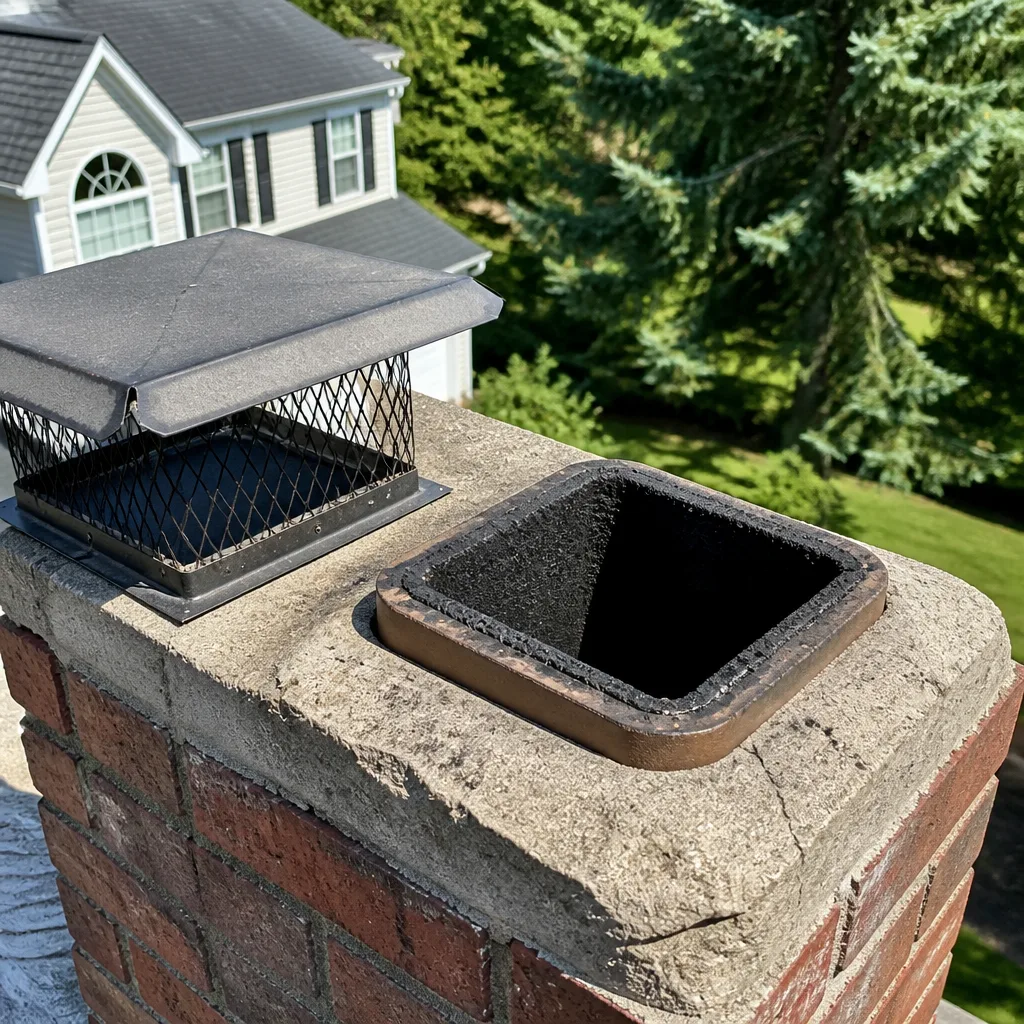 Sweep & inspection
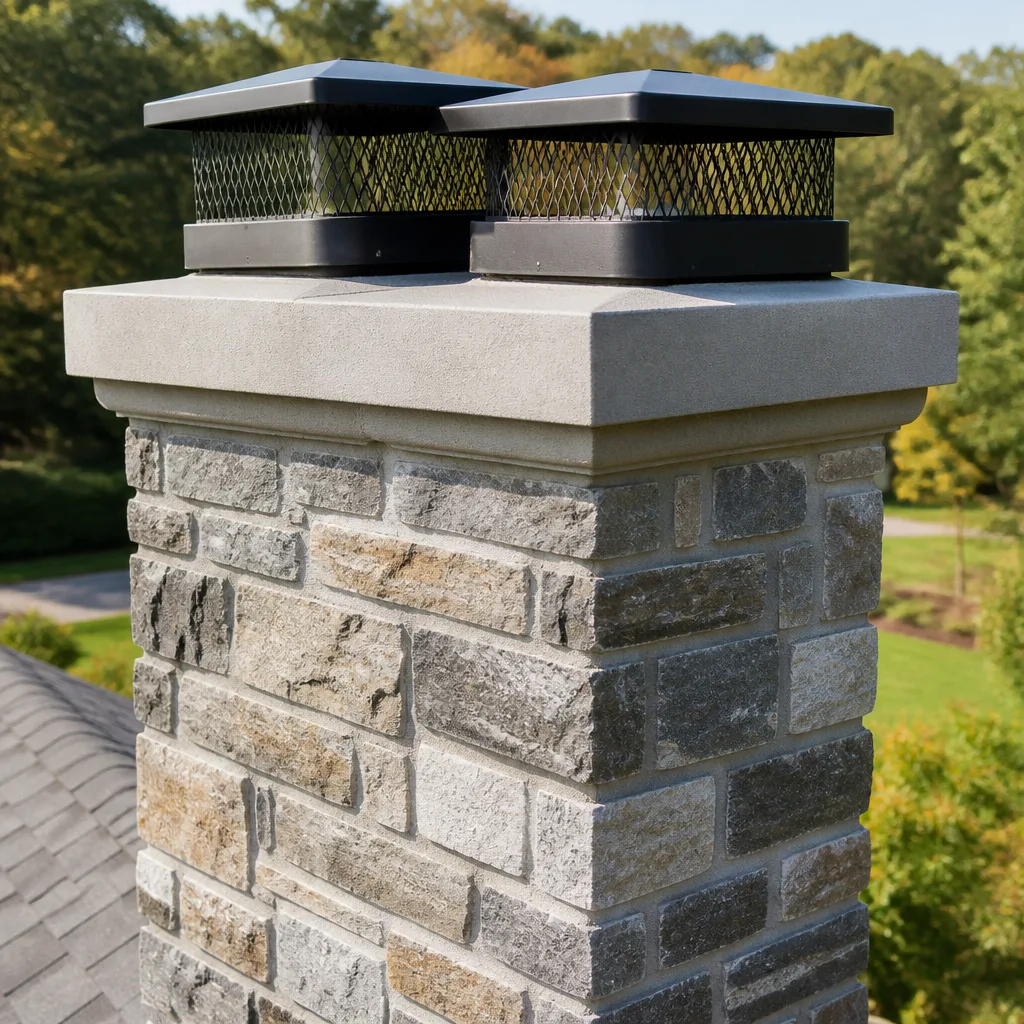 Caps & crowns
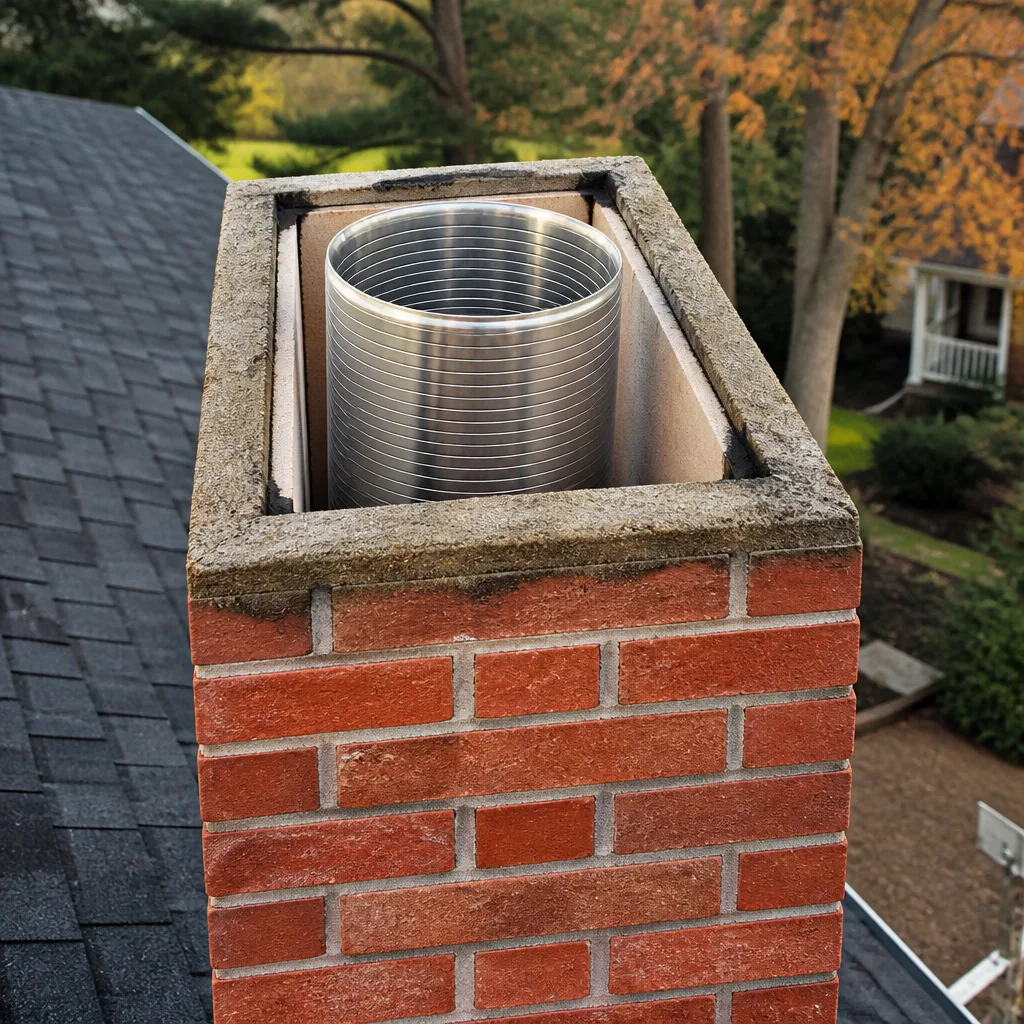 Flue relining
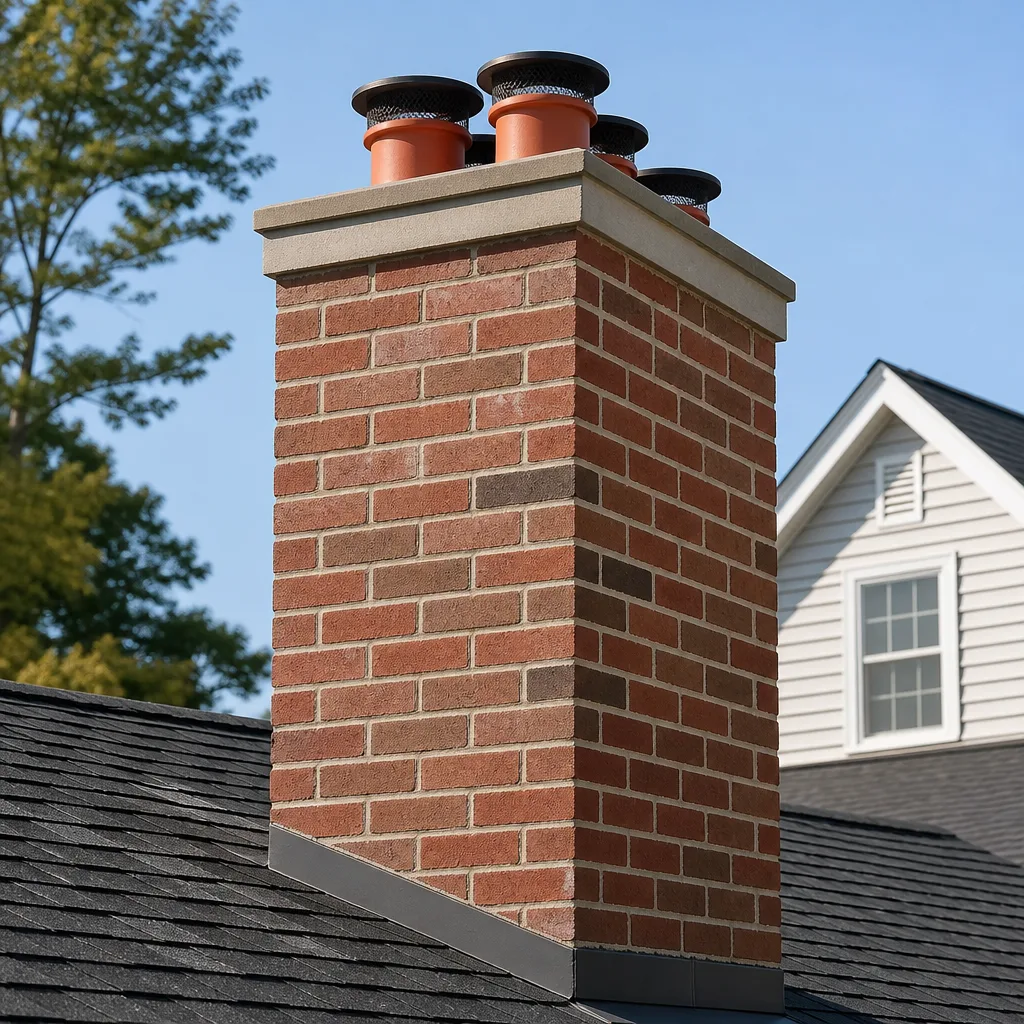 Masonry repair
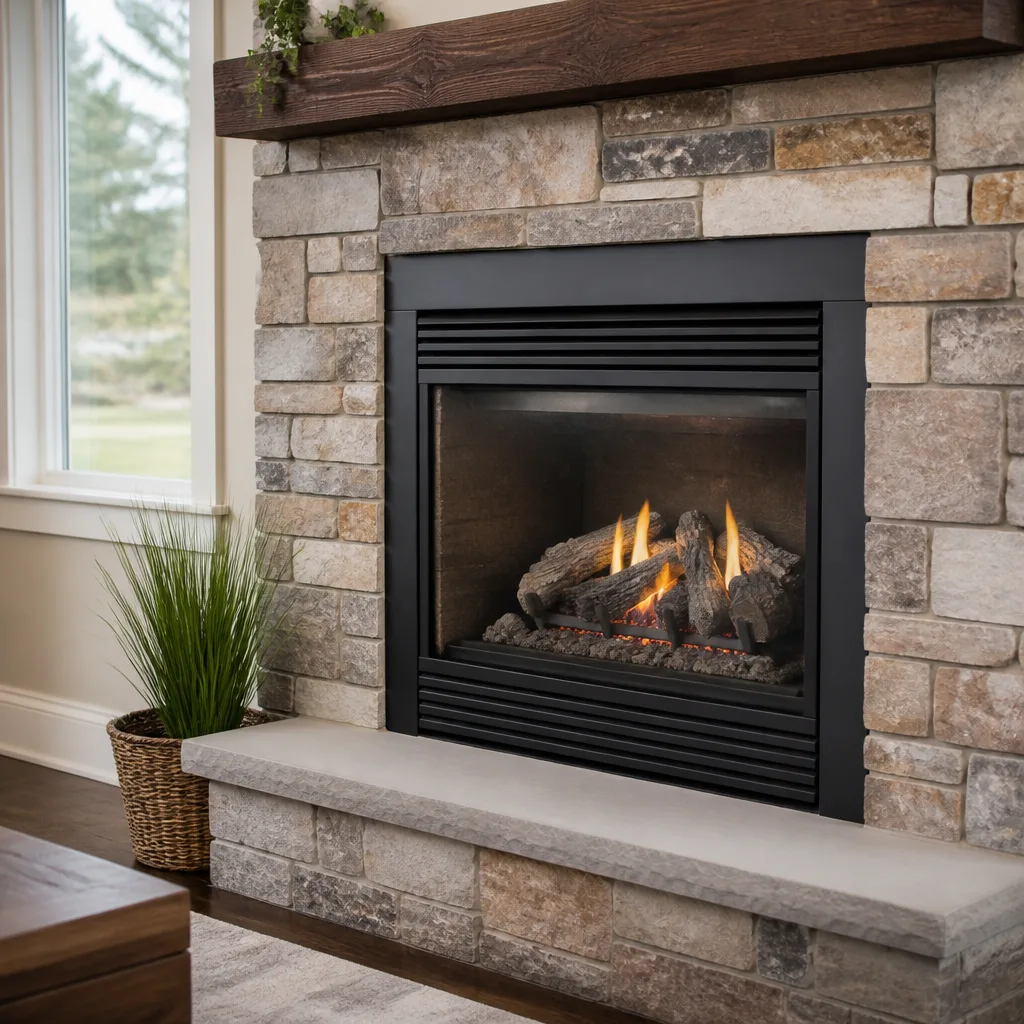 Gas fireplace service
Level 1 sweep and inspection to the NFPA 211 annual standard - flue, crown, cap, and flashing checked and photographed
Chimney sweep logs do not sweep chimneys. They loosen some creosote - which then falls where a brush and vacuum still have to collect it.
Chimney Sweep Maintenance Checklist for San Carlos Homeowners
Most San Carlos homeowners who think they’re maintaining their chimney properly are actually missing the single highest-risk component in the entire system: the smoke chamber. That angled brick transition zone between your firebox and flue collects glazed creosote faster than the flue itself in low-use fireplaces, and you can’t see it without a mirror, a camera, or a professional-grade borescope. This checklist covers what you can verify yourself from the ground and from inside the firebox, what to photograph and document for insurance, and when the job genuinely requires a credentialed sweep with video scanning equipment. It’s written specifically for the chimneys we work on in San Carlos, where salt air from the bay, wildfire smoke season, and a housing stock heavy with mid-century masonry all create maintenance patterns you won’t find in a generic chimney guide.
Quick Answer
A complete chimney maintenance checklist for San Carlos homeowners has two parts: owner-verifiable checks you perform seasonally (crown condition, cap integrity, flashing separation, draft test, firebox joint inspection, damper operation) and professional checks requiring video scanning equipment (smoke chamber creosote levels, flue liner cracks, concealed mortar joint failures). The most important single item is a camera inspection of the smoke chamber, which collects glazed creosote in occasionally-used fireplaces and is invisible from the firebox or rooftop. Schedule Chimney Sweep services for a professional sweep and video inspection once per year before burning season, and again if wildfire smoke has coated your flue.
Styles & brands we work with
- Sweep & inspection
- Caps & crowns
- Flue relining
- Masonry repair
- Gas fireplace service
Table of Contents
- Exterior Checks You Can Do From the Ground or Ladder
- Interior Checks Before You Light the First Fire
- The Smoke Chamber Blind Spot
- Seasonal Timing for San Carlos: When to Sweep
- Documentation: What to Keep on File
- Professional-Grade vs. DIY: Where the Line Is
- Common Mistakes to Avoid
- When to Call a Professional
- Frequently Asked Questions
Exterior Checks You Can Do From the Ground or Ladder
Start with a visual inspection of the chimney’s exterior. Grab a pair of binoculars if you don’t want to climb, or use a ladder with a stabilizer if you’re comfortable working at height. Never get on a roof without a spotter and proper fall protection. What you’re looking for falls into three categories: crown condition, cap integrity, and flashing separation.
Crown Condition
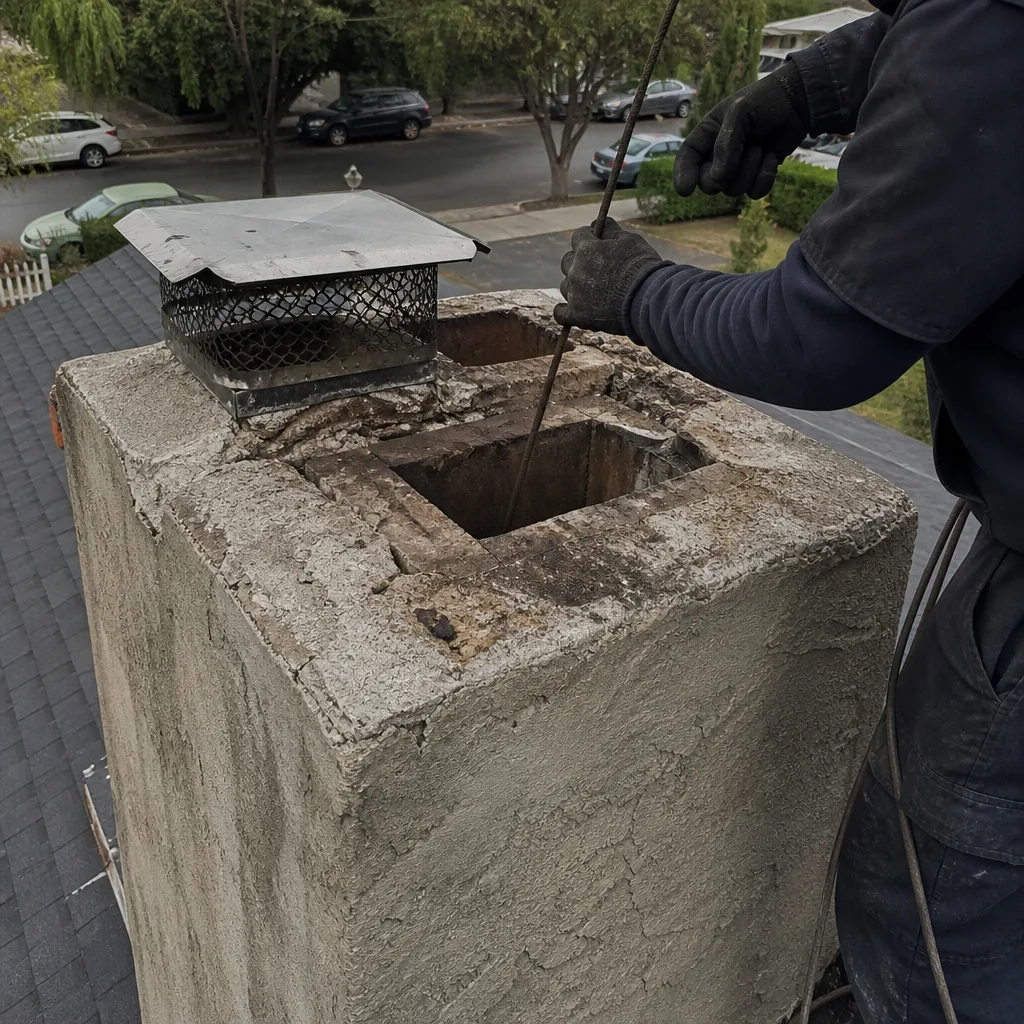
The crown is the concrete or mortar slab that caps the top of your chimney structure. It’s your flue’s first line of defense against water intrusion, and in San Carlos it takes a beating. The bay’s salt air accelerates spalling in concrete crowns, especially on homes built before 1980. Look for hairline cracks wider than a credit card edge, chunks of missing material, or a crown that’s visibly pitched toward the flue instead of away from it. Water that pools on a crown seeps down into the masonry, freezes and thaws during winter cold snaps (yes, even here, the hill neighborhoods see frost), and slowly deteriorates the mortar joints from the inside out.
What to photograph: Any crack, however small, with a quarter in the frame for scale. Crown repair is relatively inexpensive compared to the chimney rebuild it prevents. Every chimney maintenance file in San Carlos should start with a dated crown photo.
Cap Integrity
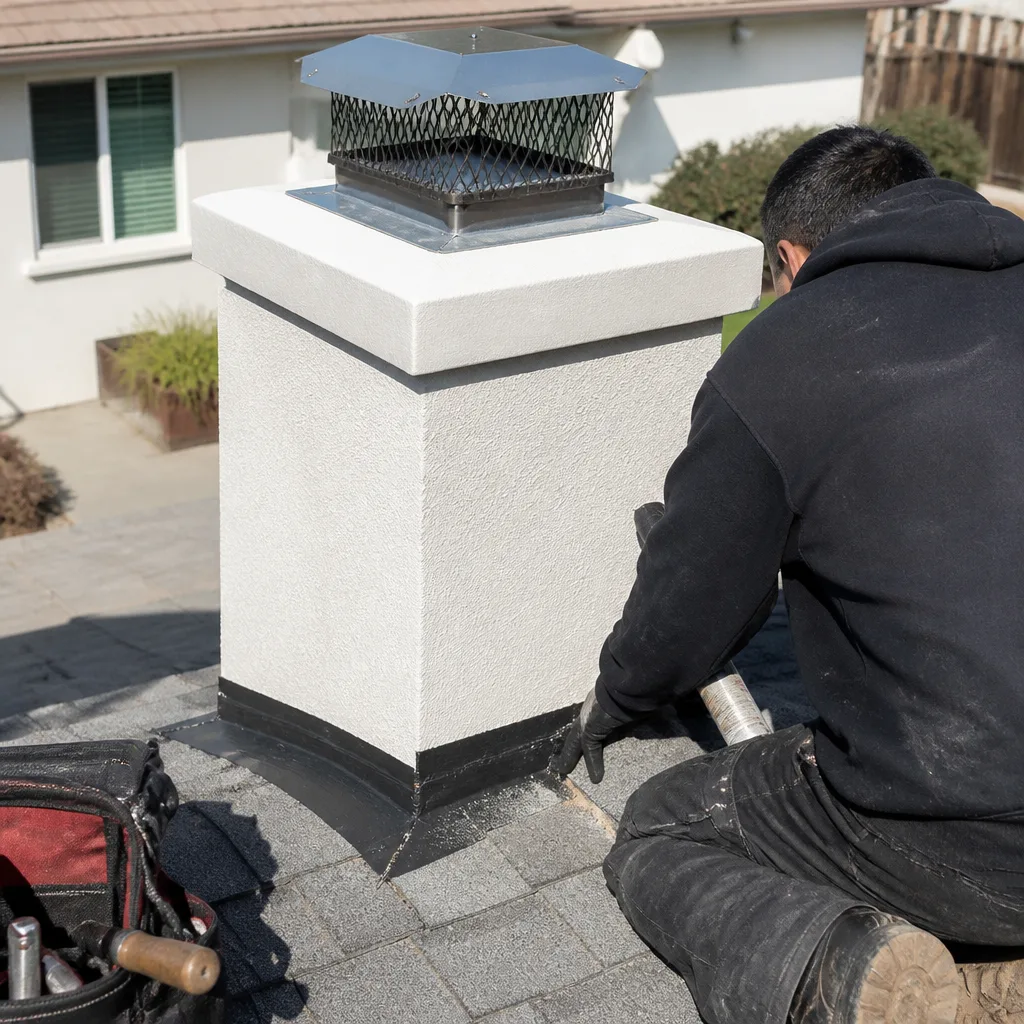
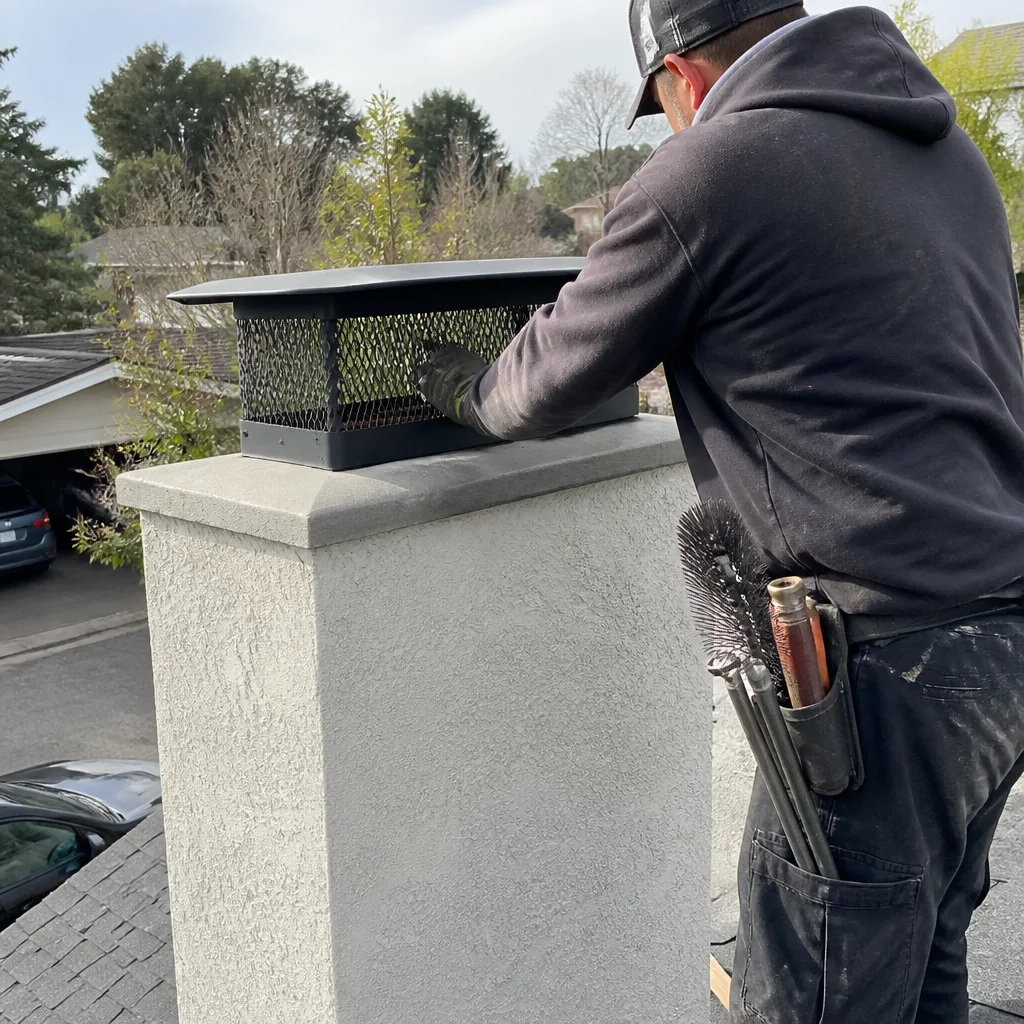
A properly fitted cap keeps rain, leaves, and animals out while allowing exhaust to escape. Most caps in San Carlos are either galvanized steel (which rusts through at the seams and fails within five to seven years near salt air) or stainless steel (which lasts significantly longer when properly installed). Check that the cap is seated level, that the mesh screen is intact without gaps larger than a half inch, and that the cap is actually attached to the flue rather than just resting on top. We regularly find caps that were never screwed or clamped in place, which means a strong winter storm can send them into the yard or down the flue.
When we replace a cap, we specify Gelco caps because of the quality of the stainless steel and the fit tolerance. A purpose-built cap sized to the actual interior flue dimensions beats a box-store universal cap every time. The mesh should keep birds and embers out but not restrict draft. If the mesh is packed with creosote or pollen, it’s often easier to replace the cap than clean it.
Flashing Separation
Flashing is where the chimney meets the roof, and it’s the most common source of water intrusion in any chimney system. In San Carlos, we see two failure patterns. The first is on tile roofs, where the step flashing was improperly cut or sealed, and water runs down the chimney face and into the roof deck. The second is on composition shingle roofs, where the roofers laid shingles over the chimney flashing instead of weaving it correctly, and the sealant bead eventually cracks. Look for lifted flashing edges, missing sealant, rusted metal, and any gap wider than 1/4 inch between the flashing and the chimney face.
What to measure: Use a tape measure to document the gap. Anything over 1/4 inch is a water intrusion pathway and should be repaired before the rainy season. Flashing is a roofing component, but any reputable chimney service in San Carlos should be able to diagnose it and refer you to a roofer if the repair goes beyond the chimney’s immediate envelope.
Interior Checks Before You Light the First Fire
Inside the home, there are three checks you can perform in under ten minutes with no specialty tools. They’ll tell you whether you’re working with a functional draft, a damaged firebox, or a damper that’s not doing its job.
The Draft Test
Open the damper, light a match or a strip of newspaper, and hold it inside the firebox at the damper level. The smoke should be pulled upward into the flue. If it drifts back into the room, wavers, or gets pushed back down, you have a draft problem. The causes are usually one of three things: the flue is blocked by a nest or debri, the damper isn’t opening fully, or the interior chimney dimensions are smaller than the fireplace opening requires. A weak draft means incomplete combustion, which means more creosote, which means a higher fire risk. In San Carlos, we see draft problems more often in single-story homes than second-story fireplaces, because a taller chimney naturally creates stronger draft.
If the draft test fails, don’t light a fire until a professional has inspected the flue. A smoldering fire in a poor-draft chimney produces glazed creosote faster than any other condition.
Firebox Joint Inspection
Look at the mortar joints between the firebrick inside your firebox. The joints should be smooth, with no gaps, crumbling mortar, or missing pieces. Run a screwdriver along the joints gently. If the mortar crumbles or you can insert the tip more than 1/8 inch, the joints need repointing. In San Carlos, where many fireplaces date to the 1950s and 1960s, we frequently see firebox mortar that’s turned to sand from decades of heating and cooling cycles. Firebrick that’s loose or shifted indicates the firebox floor or back wall has moved, which is a structural issue that needs immediate attention.
Also check the ash dump door at the back or floor of the firebox, if your fireplace has one. It should open and close fully and seal against the frame. An ash dump that doesn’t seal properly allows air from the ash pit to enter the firebox, which disrupts draft and can pull ash dust into the room.
Damper Operation
Open and close the damper handle several times. It should move smoothly and seat completely in both the open and closed positions. A damper that sticks, rattles, or won’t close completely is either warped from heat or the metal frame has shifted in the masonry. A damper that doesn’t close fully lets conditioned air escape up the chimney year-round, which shows up as a higher heating and cooling bill. A damper that doesn’t open fully restricts draft during a fire. Either way, it’s a replacement or repair item, and it’s one of the cheapest fixes in the whole chimney system, usually under $200 for a standard top-sealing damper replacement.
The Smoke Chamber Blind Spot
The smoke chamber is the shockingly large, funnel-shaped void between your firebox and your flue. It’s wider than the flue by design, which means flue gases slow down as they enter it. When gases slow down, they cool. When they cool, creosote condenses out and glazes onto the chamber’s stepped brick walls. In a fireplace that’s used occasionally rather than regularly, the smoke chamber collects more creosote per fire than the flue itself, because the chamber walls never get hot enough to burn the deposits off.
You cannot see the smoke chamber from inside the firebox without a mirror and a bright work light, and even then, you’re only seeing the bottom third. You cannot see it from the roof unless the chimney is straight enough to drop a camera down. The only way to fully assess the smoke chamber is with a video scanning camera or a borescope. This is the highest-priority inspection target for any Chimney Sweep in San Carlos because it’s where glazed creosote tends to accumulate first in low-use fireplaces, and it’s where we consistently find issues that a visual-only sweep misses.
In our experience, the smoke chamber is also where an improperly specified liner makes itself known. If the original clay tile liner has failed, or if a previous owner installed a liner that doesn’t match the chamber’s dimensions, creosote builds up in the step gaps and joints. The proper fix is often a DuraFlex flexible stainless-steel liner, which is the industry benchmark for relining older chimneys in San Carlos and throughout the Bay Area. A DuraFlex liner follows the contours of the existing flue without requiring full masonry demolition, which means less invasive installs and a flue surface that resists creosote adhesion far better than old clay tile.
The bottom line on the smoke chamber: if your chimney sweep doesn’t use a camera, they’re not doing a complete job. A brush and vacuum gets surface soot off the flue but does nothing for the glazed deposits hidden in the chamber. The best sweep isn’t just a cleaning, it’s a diagnostic visit, and the camera makes the diagnosis visible. For Chimney Sweep Troubleshooting: Common Problems and How to Fix Them, see our detailed guide.
Seasonal Timing for San Carlos: When to Sweep
Conventional wisdom says sweep your chimney before winter. In San Carlos, that’s necessary but not sufficient. Our climate creates a second sweep trigger that most homeowners miss: the post-summer period after wildfire smoke season has coated flues across the Peninsula.
San Carlos sits in a microclimate zone where summer temperatures routinely exceed 85 degrees inland while the bay keeps the coastline cooler. That temperature differential pulls air through homes at day/night boundaries, and during the wildfire season, that air carries particulate matter. When you add the fact that many San Carlos homes go months without using their fireplaces during summer, the combination is a flue that gets passively coated with fine particulate without ever getting hot enough to burn anything off. The residue itself isn’t always creosote, but it primes the flue surface for rapid creosote buildup once burning season starts.
Here’s the seasonal rhythm we recommend for San Carlos homeowners.
- Pre-winter sweep (September through November): The essential service. Removes creosote and debris accumulated from last season, verifies draft, and provides a video inspection that documents the flue’s condition before you use it.
- Post-wildfire-season check (September to October): If the Bay Area experienced significant wildfire smoke during summer, schedule this combined with the pre-winter sweep, or separately if your chimney has seen heavy smoke exposure. A camera inspection tells you whether particulate has coated the flue and whether a cleaning is warranted before burning begins.
- Spring evaluation (March to May): The off-season is the best time for repairs. Crown replacement, flashing work, masonry repointing, and liner installation are all easier to schedule and often less expensive when chimney services in San Carlos aren’t in peak winter demand.
The pre-winter and post-summer cleanings aren’t redundant. They address different build-up patterns: the post-summer one addresses particulate coating from atmospheric smoke, the pre-winter one addresses the creosote that comes from actual fires. A home that gets both sees less total creosote accumulation per burning season and catches liner or masonry problems earlier.
Documentation: What to Keep on File
Documentation is the least exciting part of chimney maintenance, and it’s also the one that saves you money when you sell your home, file an insurance claim, or need to prove that you maintained the system to code. In California, real estate disclosures require sellers to disclose known material defects. A complete chimney maintenance file converts an unknown liability into a documented, maintained system, which is the difference between a smooth transaction and a nervous buyer demanding a price concession.
Here’s what to keep in a folder, physical or digital, and update yearly.
- Dated photos from every inspection: Crown, cap, flashing, firebox, and damper. Dated photos are the single most useful piece of documentation in any dispute, whether with an insurance company or a buyer’s inspector.
- The video scan from each professional sweep: A camera inspection produces a visual record showing the flue and smoke chamber condition at a specific point in time. Keep the file or the link for at least five years.
- A written report from each sweep: The report should note creosote levels, liner condition, damper function, and any repairs recommended or completed. The report is the paper trail that ties everything else together.
- Receipts for any repairs, liner installations, or cap replacements: Receipts prove what was installed, when, and by whom. They’re especially important for liner systems like HeatShield or DuraFlex, where a warranty may transfer to a new owner.
- A log of burning frequency: A simple note like “fall 2026: 8 fires, average burn time 4 hours” gives context to the inspection reports and tells the next sweep what they’re likely to find.
Under California law, sellers must complete a transfer disclosure statement, and fireplaces and chimneys are explicitly listed as items that require disclosure of known defects. A maintained file converts your disclosure from “unknown condition” to “maintained and inspected annually,” which is a materially more valuable position. When we service a Chimney Sweep San Carlos home, the video scan and report is always included, which means our clients always have the documentation they need.
Professional-Grade vs. DIY: Where the Line Is
The right question for a homeowner isn’t “Can I do this myself?” but “What am I actually qualified to assess safely and accurately?” Here’s the honest breakdown. Some things you can do, some you shouldn’t, and some you physically can’t do without equipment you won’t have.
What you can do yourself: Visual exterior checks from the ground or a safe ladder, firebox joint inspection, damper operation check, draft test, and documentation of everything you observe. These checks don’t require you to get on the roof, reach into the chimney, or handle chemicals. They’re reasonable homeowner tasks, and they’re what makes the owner-verifiable half of this checklist genuinely useful.
What you shouldn’t do yourself: Any work on the flue itself, including brushing, chemical creosote treatment, or liner inspection. The flue is a confined, vertical space with sharp edges, crumbling clay tile, and unpredictable obstacles. A homeowner with a brush and a rope is working blind. The brush can get stuck, the clay tile can break, and the roof work puts you at height risk with no fall protection. We see the results of DIY chimney cleaning every season in San Carlos, usually as a stuck brush, a damaged liner, or a homeowner who fell off a roof and ended up with injuries that cost far more than a professional sweep would have. Learn about Choosing the Right Chimney Cleaning Brand: A Buyer’s Guide for San Carlos to avoid these pitfalls.
What you cannot do yourself: A full smoke chamber inspection with a video camera. This is the single most important chimney inspection in a low-use fireplace, and it requires a borescope camera, a trained operator who knows how to read the images, and the experience to tell the difference between minor glazing and a liner that’s failing. When we perform a Chimney Repair in San Carlos inspection, the camera reveals what the brush can’t; cracked flue tiles, separated mortar joints, hidden blockages, and smoke chamber glazing. These findings drive the repair decision, and they’re impossible to make accurately without seeing the actual condition of the interior surfaces.
The other reason to call a professional for the flue portion of the work: material specification. When a liner needs repair or replacement, the right material matters. HeatShield ceramic resurfacing can rehabilitate a damaged flue without a full relining, but it requires specific application training and certification. DuraFlex flexible stainless steel liners need to be sized to the flue, properly insulated, and connected to the appliance with the correct connectors and caps. These are specification-grade products, not homeowner-grade fixes, and they’re the difference between a chimney that works for twenty years and a liner that fails in five.
Your flue is a system, not just a tube. The liner, the smoke chamber, the firebox, the cap, and the draft all work together, and when one component fails, the others start to fail faster. A professional with the right equipment and the right product lines can diagnose the whole system in one visit. That’s what we mean when we say we find it on inspection and fix it on the same call.
Common Mistakes to Avoid
- Assuming a visual sweep is complete. A brush and vacuum clean the flue surface but miss the smoke chamber entirely. In low-use San Carlos fireplaces, the smoke chamber is where the dangerous glazing lives. Insist on a camera inspection.
- Sweeping only before winter. San Carlos’s wildfire smoke season coats flues with particulate even when the fireplace isn’t used. The post-summer check matters as much as the pre-winter sweep.
- Ignoring a small crown crack. A hairline crown crack becomes a masonry failure faster in San Carlos than in drier, inland climates. Salt air accelerates the damage. Photograph it, monitor it, and repair it before it becomes a chimney rebuild.
- Replacing a cap with a universal box-store unit. The cheap cap won’t fit your flue properly, will restrict draft, and will fail in salt air within a few seasons. A properly specified cap, like the Gelco units we install, fits the actual flue dimensions and lasts.
- Burning wet or unseasoned wood. San Carlos doesn’t have the extreme winter weather of other markets, which means firewood suppliers sometimes sell wood that hasn’t been properly dried. Wet wood produces creosote at an accelerated rate and reduces draft efficiency.
- Treating chimney maintenance and dryer vent cleaning as unrelated tasks. Dryer vents are chimneys too. The lint in a dryer vent is just as flammable as creosote, and the fire risk is just as real. A full venting maintenance plan includes both. Our Dryer Vent Cleaning in San Carlos service addresses the same fire-safety objective from the appliance side.
- Not keeping dated photos and reports. When you sell your home or file a claim, the seller with documentation has a materially stronger position than the seller who has to say “unknown condition.” This is free leverage.
When to Call a Professional
Call a professional when any of these are true: you see a crack in the crown or flue tile, your draft test fails, you smell smoke or a campfire odor when the fireplace isn’t in use, you see water stains on the ceiling near the chimney, you hear animals in the flue, or you haven’t had a camera inspection of the smoke chamber in the last twelve months. Also call before you buy a home with a fireplace in San Carlos; a pre-purchase chimney inspection is a small cost that often uncovers expensive surprises sellers didn’t disclose.
Chimney Sweep San Carlos offers free estimates in San Carlos. We bring a camera, we show you what we find, and we don’t recommend repairs that the video doesn’t justify. Call (833) 620-0350 to schedule a sweep or discuss what you’re seeing. If you’d rather look at our service pages first, the Chimney Sweep in San Carlos page has our full cleaning and inspection process laid out step by step.
Frequently Asked Questions
A chimney used regularly should be swept once per year, at minimum, before burning season. In San Carlos, we recommend adding a second sweep in the fall after wildfire smoke season if the flue has been exposed to heavy particulate. Homes with low annual usage can sometimes extend to 18 months, but only if a camera inspection confirms the smoke chamber and flue are clean. Get it inspected yearly, sweep as needed.
A standard chimney sweep and inspection in San Carlos typically runs between $180 and $350, depending on the flue size, accessibility, and the level of creosote build-up. A camera scan adds cost but provides the only complete view of the smoke chamber and flue. Repairs like crown work, flashing, or liner installation are quoted separately. Call Chimney Sweep San Carlos at (833) 620-0350 for a free estimate based on your specific chimney.
Not every liner problem requires full replacement. Cracked clay tiles, minor joint separation, and surface damage can often be rehabilitated with HeatShield ceramic resurfacing, which restores the flue’s structural integrity and insulation without demolition. When the liner is too far gone, a DuraFlex flexible stainless liner is the standard. The honest answer depends on what a camera shows, which is why we don’t recommend liner work without video evidence. Get the camera inspection first, then decide.
Skipped maintenance allows creosote to build up in the flue and smoke chamber, which increases the risk of a chimney fire. Creosote is combustible at temperatures over 450 degrees Fahrenheit, and a chimney fire can reach 2,000 degrees. Over time, cracked liners and water intrusion degrade masonry joints. The repair cost after several years of neglect is almost always higher than the cost of annual maintenance, and the fire risk is cumulative. It’s a false economy. Call (833) 620-0350 to get on a schedule before the backlog of problems gets worse.
A sweep alone is never enough. The brush and vacuum clean the surface but don’t reveal cracks, separation, or smoke chamber build-up. A complete service includes a camera inspection of the flue and smoke chamber, a damper check, and a report. We don’t perform a sweep in San Carlos without a camera, because performing one without the other means we’d be leaving the most common failure points unseen. A sweep that doesn’t include inspection is a half service.
Yes. California real estate disclosures require sellers to disclose known chimney defects, but undisclosed problems are common because many homeowners have never had a camera inspection. A pre-purchase chimney inspection costs a few hundred dollars and often finds issues the general home inspector missed. If the inspector flags a crown crack, a damper problem, or a liner concern, get a specialist’s camera in there before you close. The cost is small compared to the repair work it might save you from.
The Bottom Line
A working chimney in San Carlos needs more than an annual brushing. The smoke chamber is the most overlooked component in the system, and the only way to see it is with a camera. Owner-verifiable checks from the ground and firebox cover the exterior and the obvious interior issues, but the flue’s true condition lives in places you can’t reach or see. Document everything, sweep before winter and after wildfire season, and choose a sweep who brings video equipment and specifies professional-grade materials. For more guides & resources, visit our blog. Your flue is a system, not just a tube, and every component has a job to do.
To schedule a sweep or get a camera inspection before burning season, call Chimney Sweep San Carlos at (833) 620-0350 for a free estimate, or visit the Chimney Sweep San Carlos home page to see our full service range.
Written by the team at Chimney Sweep San Carlos, serving San Carlos since 2011.
See the difference
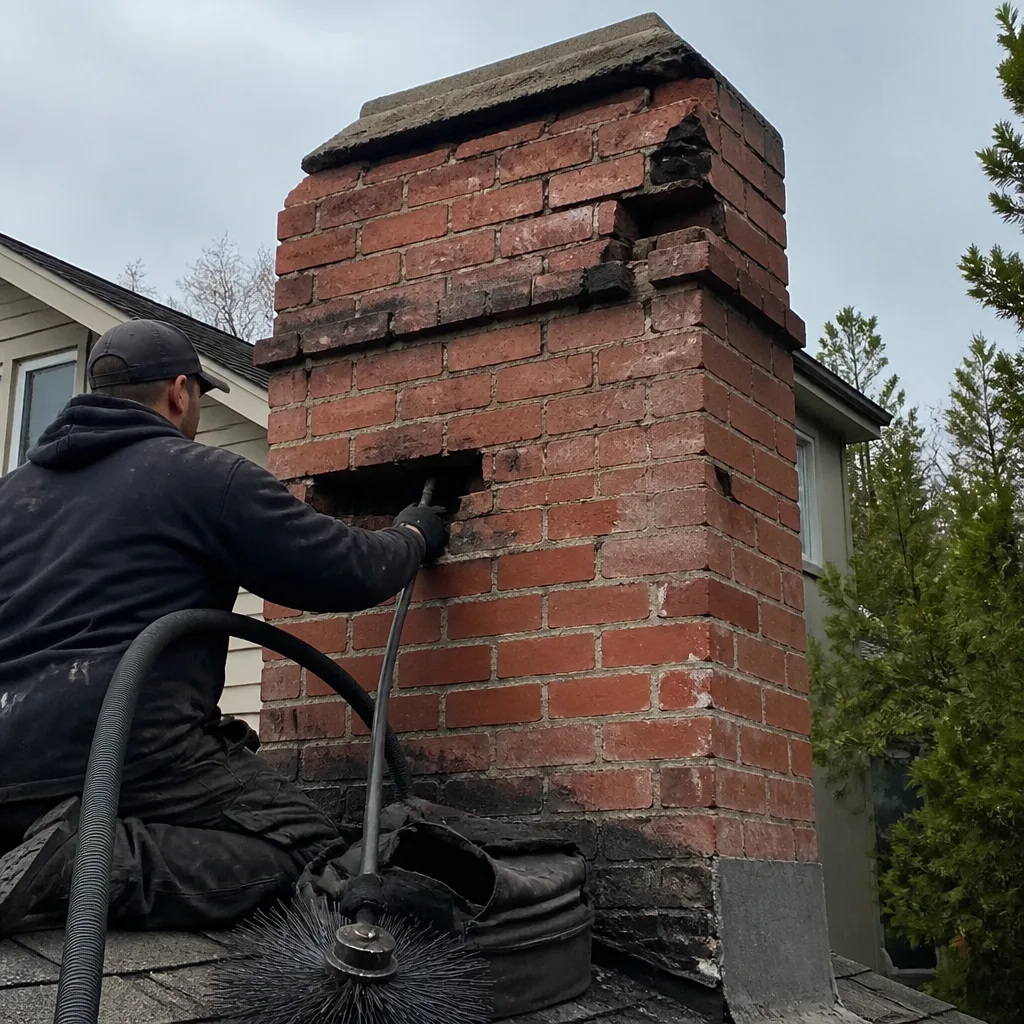 Before
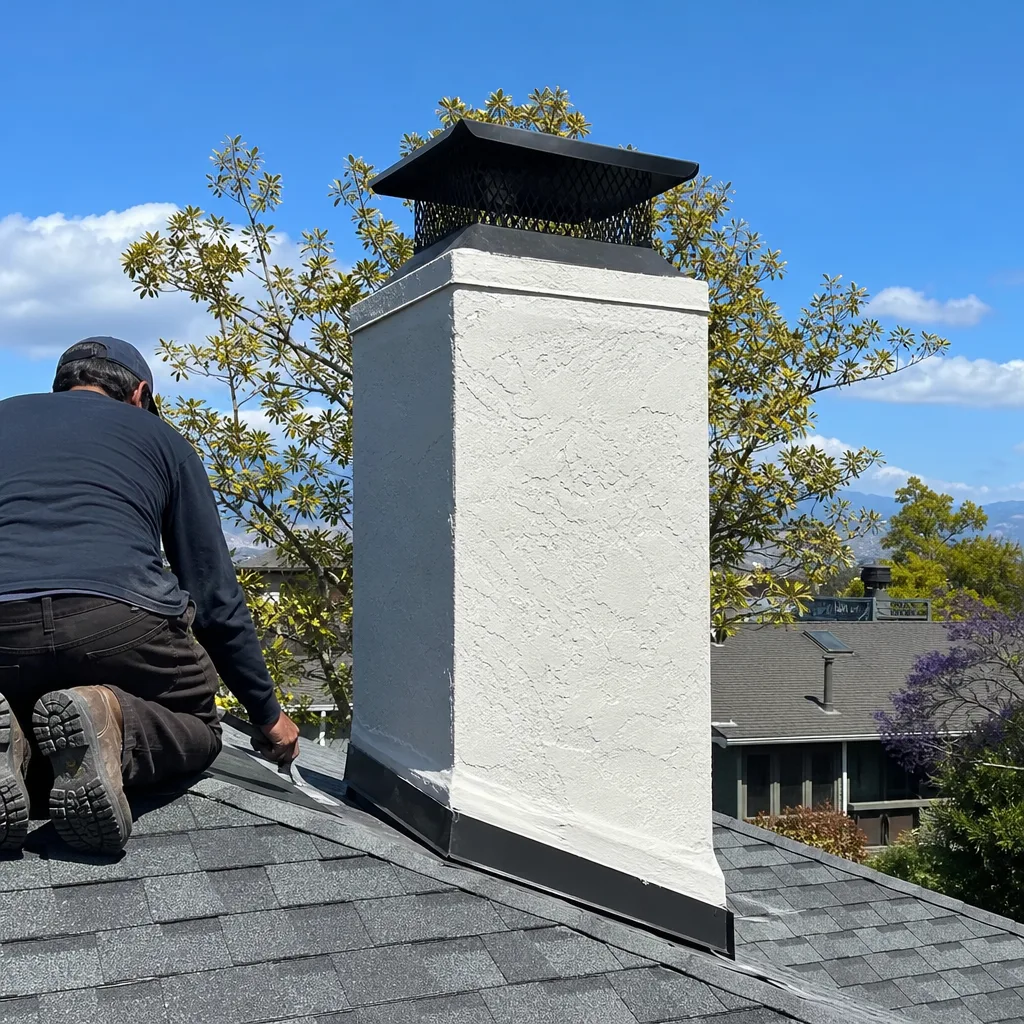 After
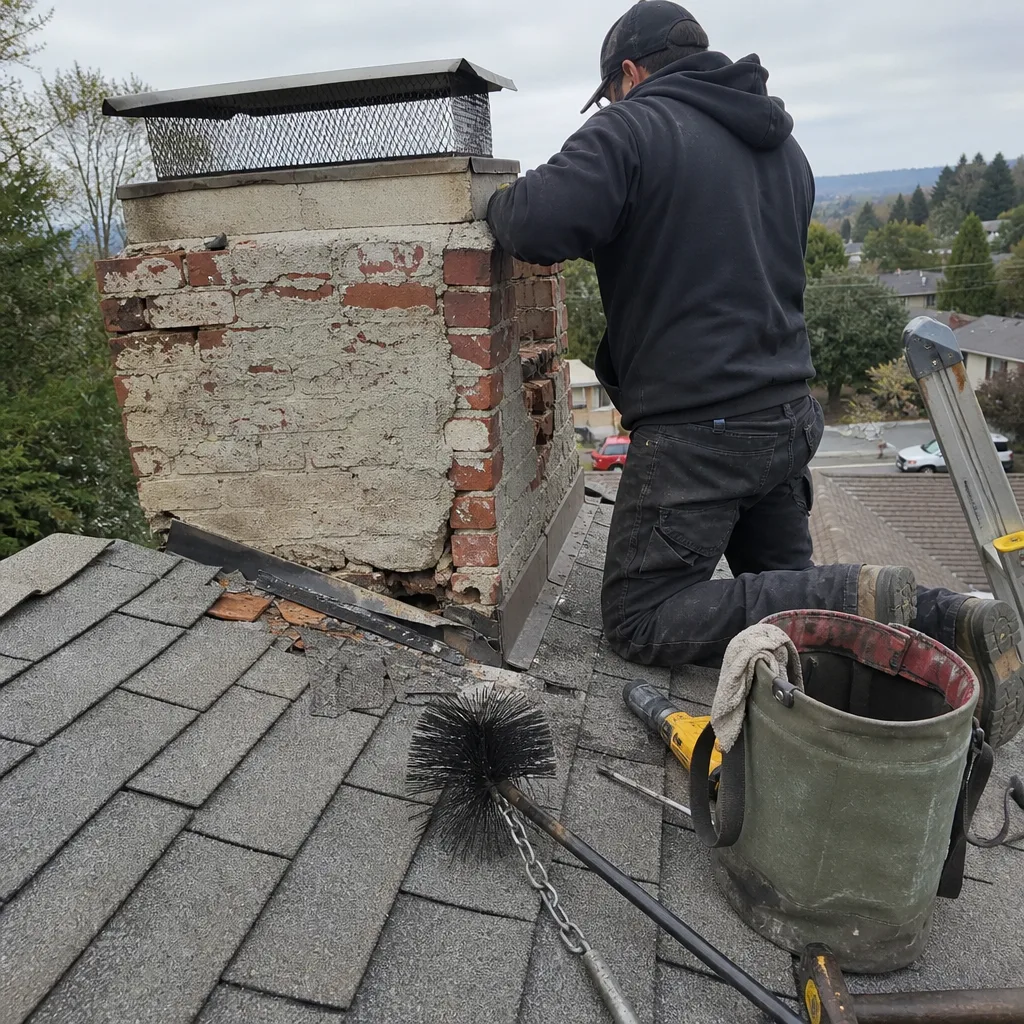 Before
 After
 Before
 After