
Last updated November 2, 2026
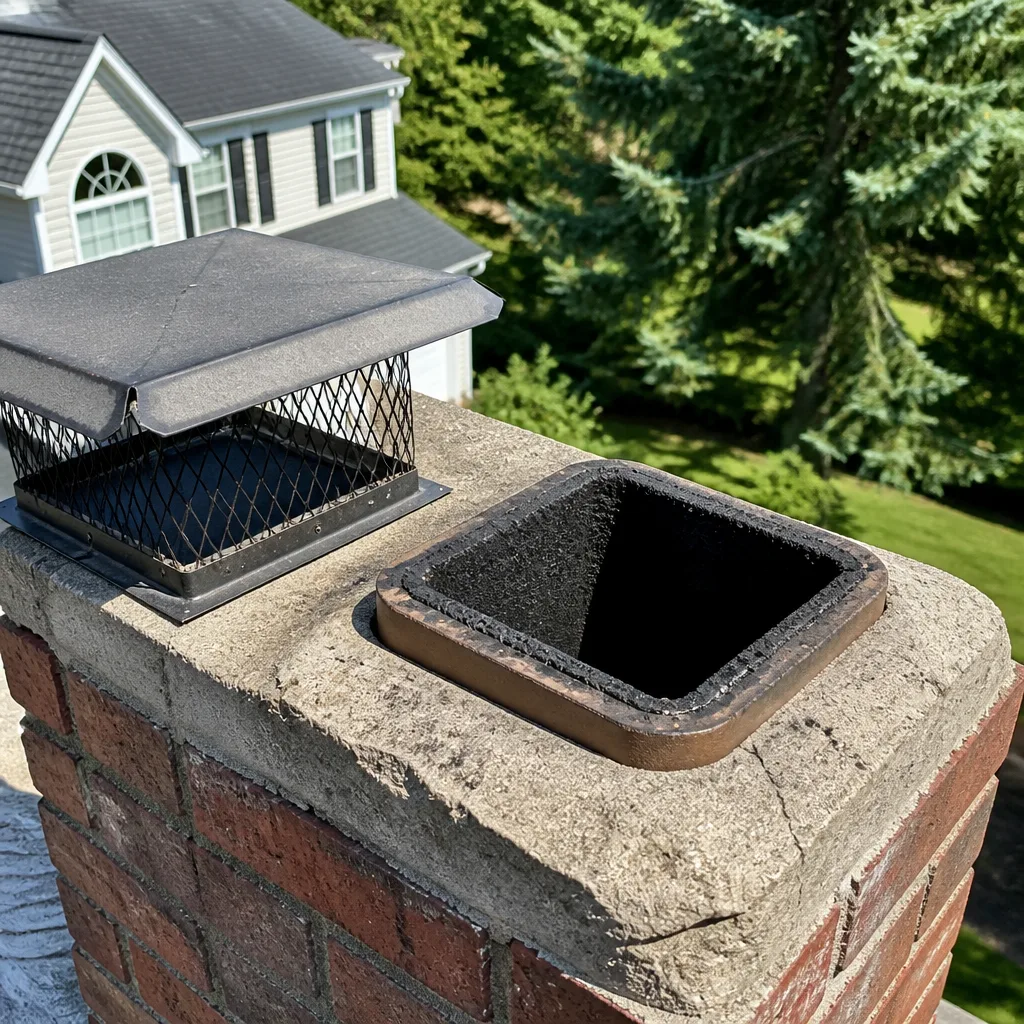 Sweep & inspection
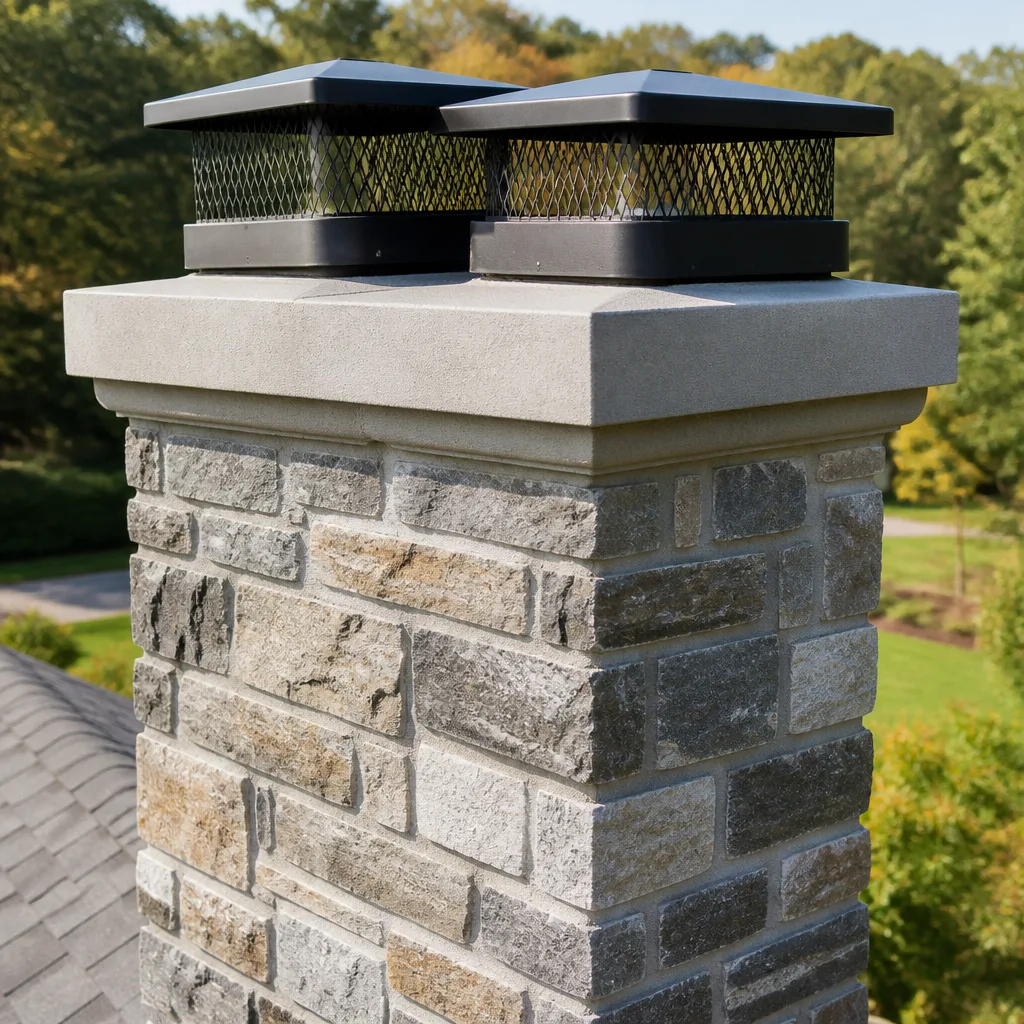 Caps & crowns
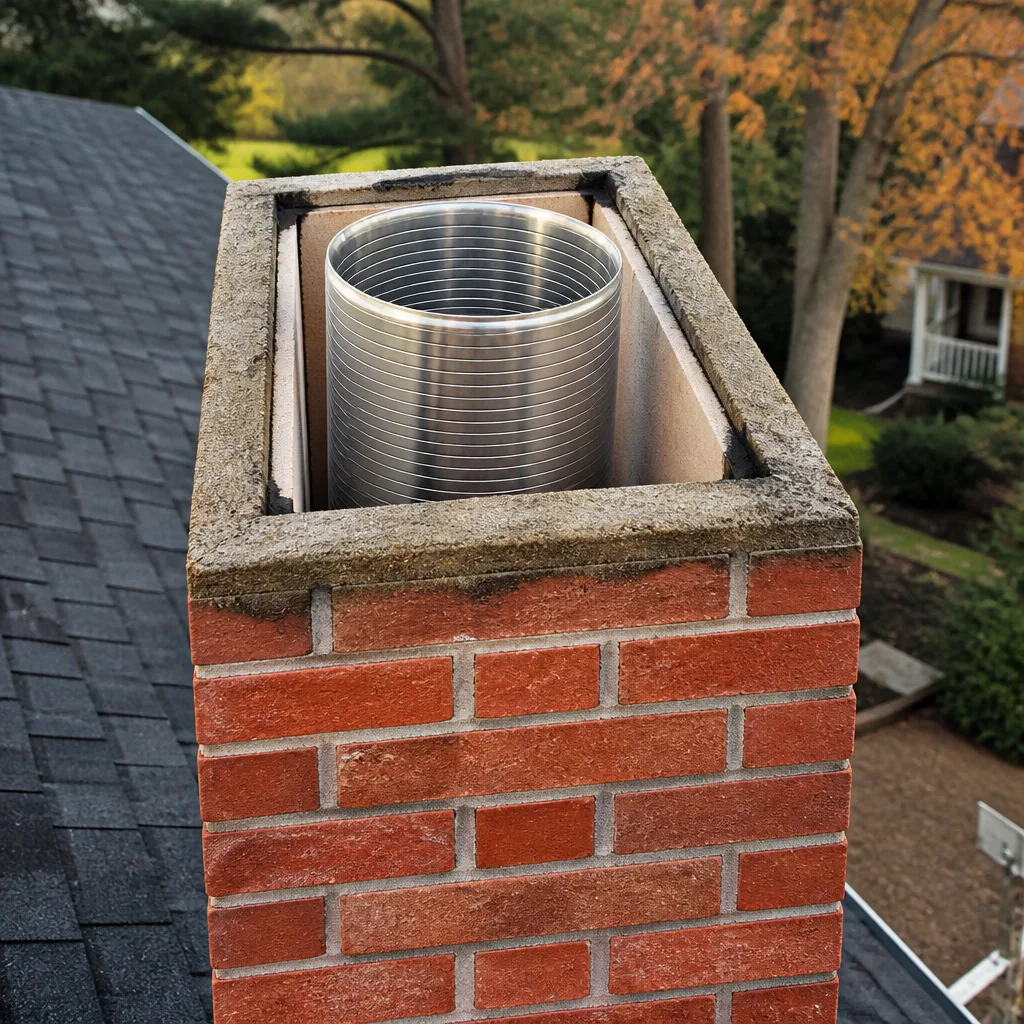 Flue relining
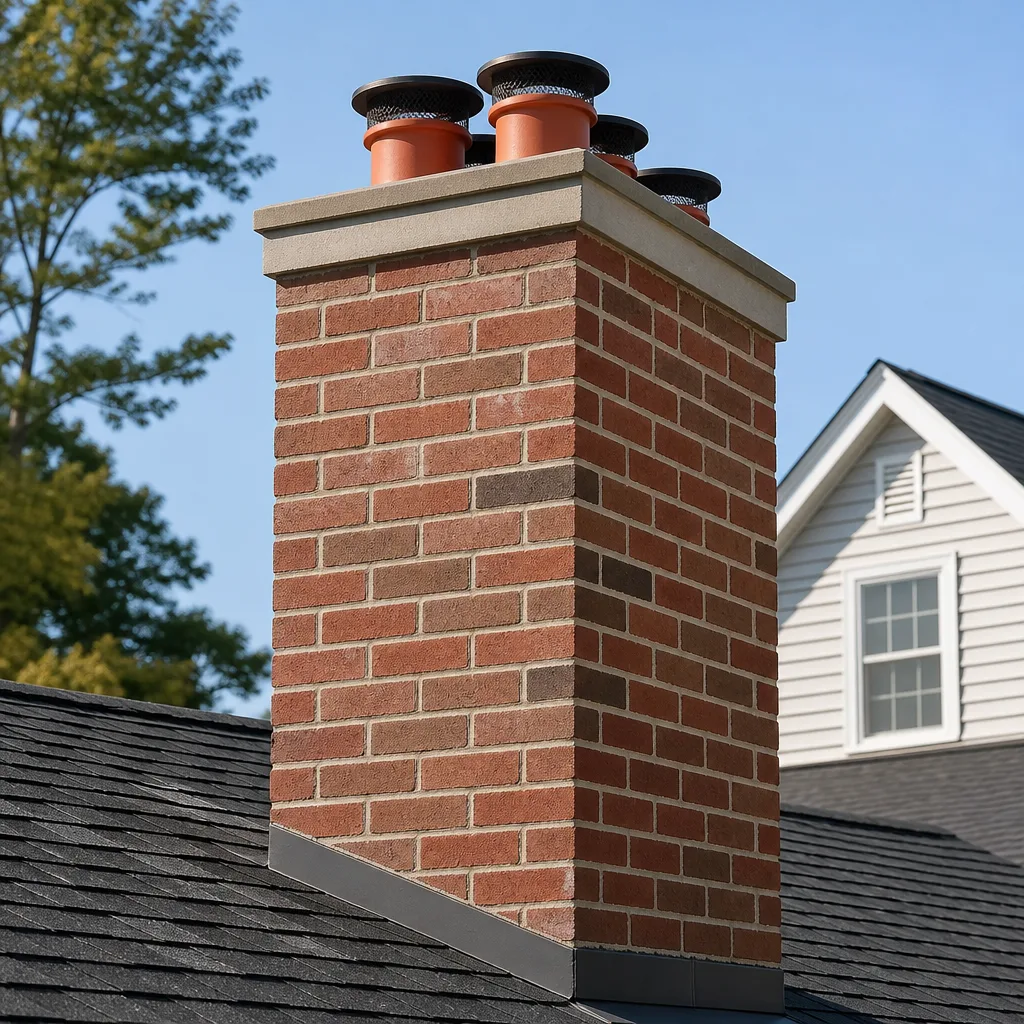 Masonry repair
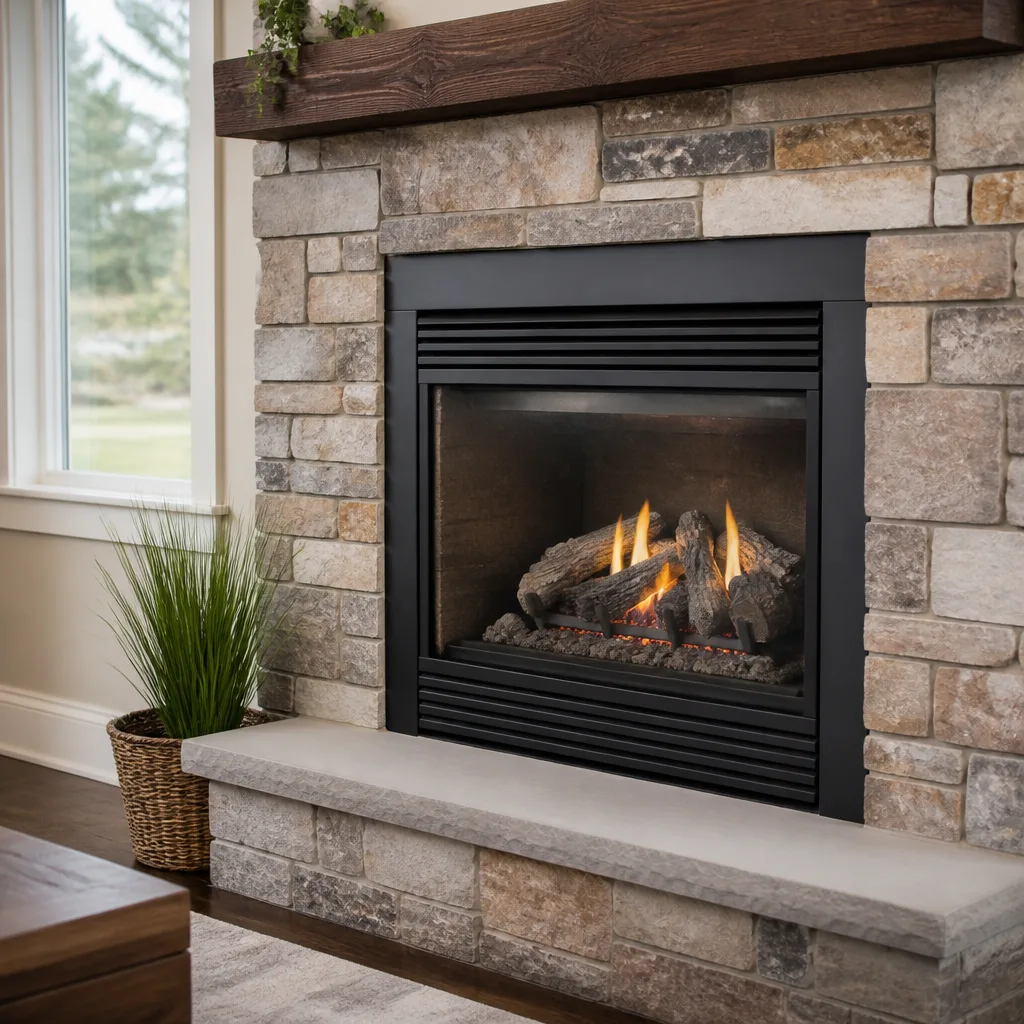 Gas fireplace service
Level 1 sweep and inspection to the NFPA 211 annual standard - flue, crown, cap, and flashing checked and photographed
Chimney sweep logs do not sweep chimneys. They loosen some creosote - which then falls where a brush and vacuum still have to collect it.
Chimney Cleaning Permits, Codes & Inspections in CA: What You Need to Know
Here’s a fact that surprises most Bay Area homeowners: a chimney liner replacement completed without a building permit in San Mateo County can legally constitute unpermitted work under California Health and Safety Code, the same category as an unpermitted room addition. That means it must be disclosed when you sell, it can complicate a refinance, and in some cases it gives an insurance carrier grounds to deny a fire claim. Most people assume chimney work falls into the same maintenance bucket as painting or replacing a faucet. Some of it does. Some of it absolutely does not. This guide walks through exactly where that line sits in California, how NFPA 211 governs what a real inspection must cover, what San Carlos homeowners face with dual fire-district and building-department jurisdiction, and how to verify a chimney’s permit history before you buy a house. If you own a fireplace in San Carlos, you’ll use what’s here.
Quick Answer
Routine chimney sweeping and Level 1 inspections do not require a permit anywhere in California, including San Carlos. However, chimney relining, fireplace reconstruction, firebox repair, and certain cap or crown replacements that involve structural modification fall under California Building Code and typically require a permit from the San Mateo County Building Department or the City of San Carlos where they’ve adopted local amendments. When in doubt, assume structural work needs a permit and maintenance work does not.
Styles & brands we work with
- Sweep & inspection
- Caps & crowns
- Flue relining
- Masonry repair
- Gas fireplace service
Table of Contents
- Permit Work vs. Maintenance: Where California Draws the Line
- How NFPA 211 Governs Chimney Inspections in California
- The Three Levels of Chimney Inspection: What Each Legally Requires
- San Carlos Jurisdiction: Fire District vs. Building Department
- Which Specific Chimney Scopes Require Permits in San Mateo County
- Chimney Inspections and California Real Estate Transfer Law
- How to Check a Chimney’s Permit History Before Buying
- What Happens When Chimney Work Was Never Permitted
Permit Work vs. Maintenance: Where California Draws the Line
California Building Code (CBC) Section 105.1 requires a permit for any construction, alteration, enlargement, repair, or improvement to a building or structure. But Section 105.2 creates exemptions, and that exemption list is where chimney maintenance lives. Specifically, CBC 105.2 exempts “ordinary repairs” that don’t affect structural integrity, egress, fire resistance, or accessibility. A chimney sweep is an ordinary repair. A liner replacement that changes how the flue functions, restores structural capacity, or alters the venting configuration is not.
In practice, here’s how the line works for the most common scopes we see in San Carlos:
- Sweeping and Level 1 inspection: No permit. This is maintenance, pure and simple. Removing creosote and checking accessible components with a flashlight and basic tools changes nothing structurally.
- Chimney cap installation: Usually no permit, as long as it’s a direct replacement or an addition that doesn’t require modifying the flue tile or crown. A Gelco cap sized to the existing flue is maintenance.
- Crown repair or resurfacing: Minor patching is maintenance. Rebuilding a crown or resurfacing it with a structural sealant crosses into repair territory, and San Mateo County inspectors have asked for permits on full crown replacements.
- Firebox repair: Refractory panel replacement often requires a permit. The firebox is a fire-rated assembly, and changing its components affects the assembly’s fire resistance rating.
- Chimney relining: Almost always requires a permit. Whether you’re installing a DuraFlex stainless liner or resurfacing with HeatShield ceramic, you’re restoring or changing the flue’s structural and fire-containment function. That’s exactly what permits exist to verify.
- Full chimney rebuild or partial teardown: Always permits. No ambiguity.
Here’s the practical takeaway from years of working in San Carlos and the surrounding Peninsula: if the work involves removing material and replacing it with something that restores structural function, assume it needs a permit until the building department tells you otherwise. If it’s cleaning and inspecting, it doesn’t.
How NFPA 211 Governs Chimney Inspections in California
NFPA 211 is the Standard for Chimneys, Fireplaces, Vents, and Solid Fuel-Burning Appliances. It’s published by the National Fire Protection Association, and California has adopted it by reference into both the California Building Code and the California Mechanical Code. That matters because it means NFPA 211 isn’t just a professional guideline here. It’s the technical standard that defines what a legally sufficient chimney inspection must cover.
What does NFPA 211 actually require? For a chimney serving a wood-burning fireplace, the standard mandates inspection of:
- The flue liner for cracks, gaps, spalling, or missing sections
- Clearances between the chimney and combustible materials like framing and insulation
- The condition of the chimney cap and spark arrestor screen
- Creosote accumulation levels and the need for sweeping
- The firebox, damper, smoke chamber, and hearth extension for structural integrity
- Proper venting and draft performance under operating conditions where applicable
NFPA 211 also sets the standard for when a chimney is considered “unsafe to operate.” A flue liner with an open joint or crack deeper than the mortar bed is actionable. A creosote glaze thicker than 1/8 inch requires mechanical or chemical removal before the next fire. A chimney without a functioning spark arrestor in a Wildland-Urban Interface (WUI) zone in San Carlos is not code-compliant, period.
We’ll be direct about one thing: a sweep-and-go without inspecting the liner is not a valid inspection under NFPA 211, regardless of what the receipt says. The standard exists because chimney fires in the U.S. cause over $200 million in property damage annually, and most of those fires start in chimneys that hadn’t been properly inspected. San Carlos falls in a Mediterranean climate with a dry fire season, so the margin for error is thinner here than in wetter climates where creosote gets rinsed out.
The Three Levels of Chimney Inspection: What Each Legally Requires
NFPA 211 defines three inspection levels, and California real estate law references them directly. Knowing which level applies to your situation prevents you from paying for more than you need or accepting less than the law requires.
- Level 1 Inspection: The baseline inspection performed during routine sweeping or annual maintenance. The technician examines all accessible portions of the chimney, checks for obstructions and combustible deposits, and verifies basic clearance and installation soundness. No specialized tools required. This is what most San Carlos homeowners need annually before burn season.
- Level 2 Inspection: Required by California real estate law when a property changes ownership. It includes everything in Level 1 plus inspection of accessible attics, crawl spaces, and basements, and requires a video scan of the flue interior. Level 2 is also required after an earthquake, chimney fire, or any event likely to have caused structural damage. San Carlos sits in a seismically active zone, which means a Level 2 after a significant earthquake is not optional if you plan to keep burning.
- Level 3 Inspection: The most invasive level, used only when Levels 1 and 2 turn up a suspected hazard that can’t be evaluated without opening the structure. This may involve removing portions of the chimney crown, interior wall surface, or surrounding masonry. Level 3 requires a permit in most cases because it involves structural alteration.
The key legal distinction: in California, a real estate transfer involving a fireplace technically triggers a Level 2 inspection requirement under NFPA 211 as the recognized standard of practice. Enforcement varies, but in San Mateo County’s disclosure-heavy transaction environment, buyers’ inspectors routinely call out missing Level 2 documentation, and sellers who can’t produce it face renegotiation or holdback. We’ll go deeper on that in the real estate section below.
San Carlos Jurisdiction: Fire District vs. Building Department
San Carlos homeowners have two authorities looking at their chimneys, and they don’t always talk to each other. The first is the San Mateo County Building Department, which handles permits and plan checks for structural work. The second is your local fire authority, which in San Carlos is the Redwood City Fire Department under a shared services agreement, with CAL FIRE jurisdiction in certain Wildland-Urban Interface zones.
Here’s how that actually plays out. The building department cares about structural integrity: is the liner sound, is the firebox built to code, were the materials approved. The fire authority cares about operational safety: is there a spark arrestor, is the chimney clean enough to prevent ignition, are the clearances adequate. A chimney can pass one authority’s review and fail the other’s.
For San Carlos homeowners, the practical implications are:
- A liner replacement permit goes through San Mateo County Building, not the fire department. The fire department doesn’t issue building permits for chimneys.
- A chimney fire in San Carlos triggers a fire department report, and that report typically requires a Level 2 inspection before the fireplace can be used again. The fire district will not sign off on continued use without documentation.
- WUI zones within San Carlos have additional requirements under California Building Code Chapter 7A, including spark arrestors on all chimneys and specific material restrictions on caps and screens.
- If your home is in a designated WUI area, your chimney cap must meet the 3/8-inch mesh standard under California’s Building Standards Code, and not every cap sold off the shelf in San Carlos meets that. This is one area where using a purpose-built cap from a manufacturer like Gelco, which produces caps to code spec, matters.
We’ve seen homeowners in the higher-elevation neighborhoods of San Carlos get cited for missing spark arrestors during fire season. The fix is usually simple and doesn’t require a permit, but it does require knowing which code applies to your specific parcel.
Which Specific Chimney Scopes Require Permits in San Mateo County
Let’s get concrete. These are the chimney scopes we see in San Carlos on a regular basis, with the permit status for each under San Mateo County’s current enforcement posture. This is not legal advice, but it reflects what we and other contractors in the area encounter when pulling documentation for customers.
| Scope of Work | Permit Required? | Notes for San Carlos |
|---|---|---|
| Chimney sweeping | No | Maintenance exemption under CBC 105.2 |
| Level 1 inspection | No | Visual inspection only |
| Level 2 inspection (video scan) | No | Inspection-only, no structural work |
| Chimney cap replacement (direct swap) | No | Must meet WUI spark arrestor standards where applicable |
| Crown minor patching | No | Cosmetic sealant work falls under maintenance |
| Full crown rebuild | Generally yes | Structural repair; County has required permits |
| HeatShield resurfacing | Usually yes | Restores flue function; treated as liner repair |
| DuraFlex stainless liner installation | Yes | New liner system; requires plan check under CBC |
| Firebox refractory replacement | Yes in most cases | Fire-rated assembly modification |
| Partial or full chimney rebuild | Always | Full permit, plan check, and inspections |
| Masonry repointing (tuckpointing) | No, if less than 50% of surface area | Over 50% triggers repair classification |
One nuance that catches homeowners: HeatShield ceramic resurfacing sometimes gets classified differently from a full liner replacement because it coats the existing flue rather than installing new material. We’ve had San Mateo County inspectors accept resurfacing as repair work that still requires a permit but bypasses some plan check requirements. Don’t assume; check with the building department before scheduling.
The bigger point is this: a contractor who tells you “we don’t need a permit for this” on a liner replacement is doing you no favors. The permit isn’t just bureaucracy. It creates a paper trail that proves the work was done to code, which is exactly what future buyers, insurers, and appraisers will ask for.
Chimney Inspections and California Real Estate Transfer Law
California Civil Code requires sellers to disclose material facts affecting the value or desirability of a property on the Transfer Disclosure Statement (TDS). A chimney with a known defect, an unpermitted liner, or a history of chimney fire falls squarely within that requirement. That’s not a gray area. It’s established law, and San Mateo County’s real estate market enforces it through transaction practice even where enforcement is inconsistent.
Here’s the sequence that plays out in almost every San Carlos transaction involving a fireplace:
- Buyer’s home inspector flags the chimney for not having video-documented inspection history. This happens in a majority of transactions where the seller can’t produce a sweep-and-inspect receipt with liner footage.
- Buyer requests a Level 2 inspection under NFPA 211’s real estate transfer standard. The cost lands on either party depending on negotiation, but it’s typically the seller who pays as a condition of closing.
- Level 2 findings drive the negotiation. A cracked flue tile or missing cap becomes either a repair credit or a requirement to complete the work before close of escrow. In San Carlos’s disclosure-intensive market, sellers almost never win this fight.
- If a liner must be installed, the permit question surfaces. Buyers’ lenders increasingly request permit documentation for structural chimney work before funding. No permit means the deal stalls or the seller eats a holdback.
The lesson for sellers: get a Level 2 inspection with video documentation before listing. It costs a few hundred dollars and removes the negotiating leverage a buyer’s inspector would otherwise have. For buyers: never accept a “recent sweep” receipt as a substitute for Level 2 video evidence. A sweep tells you the chimney was cleaned. It doesn’t tell you the liner is sound or the firebox will hold up under load.
How to Check a Chimney’s Permit History Before Buying
When you’re buying a home in San Carlos and the seller can’t produce documentation for past chimney work, you have options. Here’s the step-by-step process we recommend to clients who call us before close:
- Search San Mateo County’s online permit portal. The County maintains an ePermits system where you can search by address for building permit history. Most records from the early 2000s forward are available digitally. Older records may require a records request.
- Request a records pull from the City of San Carlos Building Division. Some San Carlos permits were historically processed through the city before the county consolidated building services. You may need to search both databases.
- Check with the fire authority. Redwood City Fire Department maintains inspection records for operational violations and post-fire requirements. If a chimney fire was reported at the address, that record exists.
- Ask the seller for a written declaration. The TDS requires sellers to disclose known unpermitted work. If the seller checks “no” and later records surface, you have a legal claim. Most sellers in San Carlos answer honestly because the penalty for concealment is severe.
- If no records exist, commission a Level 2 inspection before close. A thorough video scan tells you the flue’s current condition regardless of what happened in the past. A clean Level 2 report doesn’t substitute for permit records, but it removes the risk of an active hazard and gives you leverage in negotiation.
Missing permit records are common, especially for homes built before 1990. A missing record doesn’t automatically mean the chimney is unsafe. But it does mean you inherit the disclosure obligation when you eventually sell, and that inheritance costs you in the Bay Area market.
What Happens When Chimney Work Was Never Permitted
You own the problem. That’s the short version. Unpermitted chimney work on a property you’ve already purchased becomes your disclosure obligation at resale, your insurance risk if a fire claim is filed, and potentially your correction liability if the building department discovers it.
Here’s what actually happens in each of those channels in San Mateo County:
- Insurance claims: If a chimney fire occurs and the investigation finds an unpermitted liner or firebox modification contributed to the loss, the carrier has grounds to deny or reduce the claim. We’ve seen this happen in Bay Area claims where the policy’s unpermitted-work exclusion was triggered. It’s not a theoretical risk.
- Resale: You must disclose unpermitted work on the TDS. Buyers in San Carlos negotiate hard on this. Expect a price reduction, a repair credit, or a demand to legalize the work before closing. Legalizing unpermitted work requires opening the wall if the building department can’t verify the installation, which adds thousands to the cost of “saving” on the original permit.
- Enforcement: San Mateo County rarely pursues proactive enforcement for unpermitted chimney work. Where enforcement happens, it’s complaint-driven or triggered by a larger renovation permit application. A homeowner who pulls a permit for an unrelated addition and has unpermitted chimney work on file for the same parcel can be required to legalize both before final inspection.
The cost to legalize unpermitted work almost always exceeds the cost of the original permit. The permit fee for a liner replacement in San Mateo County is typically a few hundred dollars. Legalizing unpermitted work often requires demolition to expose the work, engineer review, and double permit fees. That math doesn’t work in the homeowner’s favor, which is why reputable chimney contractors in San Carlos pull permits as standard practice on structural scopes.
Common Mistakes to Avoid
- Assuming all chimney work is maintenance. Cleaning is maintenance. Liner work is construction. The distinction matters legally and financially.
- Accepting a sweep receipt as an inspection report. A sweep and a Level 2 video inspection are different things. One cleans; the other documents condition. For a real estate transfer, only the second matters.
- Skipping the permit to “save time and money.” The original permit fee in San Mateo County is modest. The cost to legalize unpermitted work later is not.
- Not checking the WUI overlay before installing a cap. San Carlos has Wildland-Urban Interface zones where spark arrestor requirements are stricter. Installing the wrong cap means replacing it.
- Using a contractor who doesn’t pull permits on structural work. A contractor willing to do unpermitted liner work is cutting corners elsewhere too. In our experience in San Carlos, that’s not a maybe.
- Failing to document the chimney before selling. Sellers who can’t produce a Level 2 report leave money on the table in San Mateo County negotiations.
- Ignoring a Level 2 recommendation after an earthquake. San Carlos sits in seismic country. A crack in the flue liner after a quake is an invisible fire hazard until it isn’t.
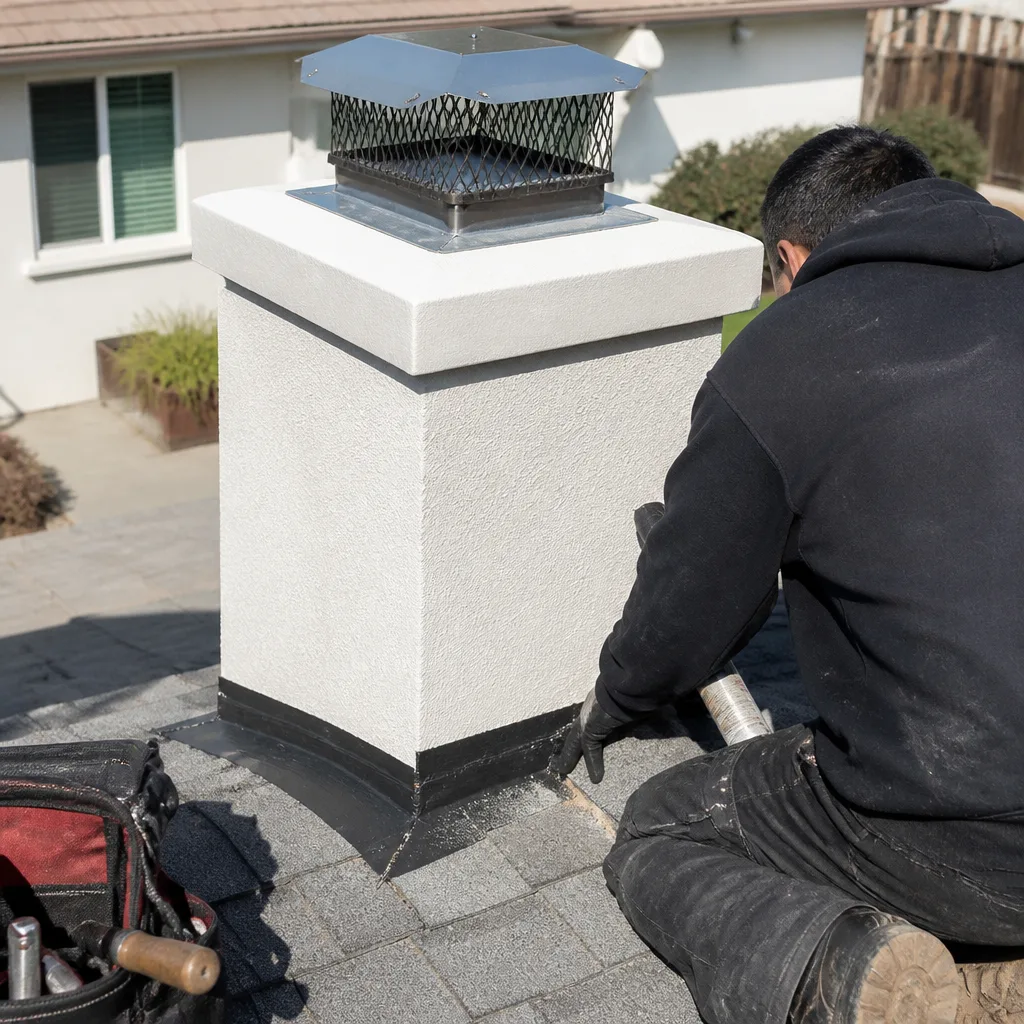
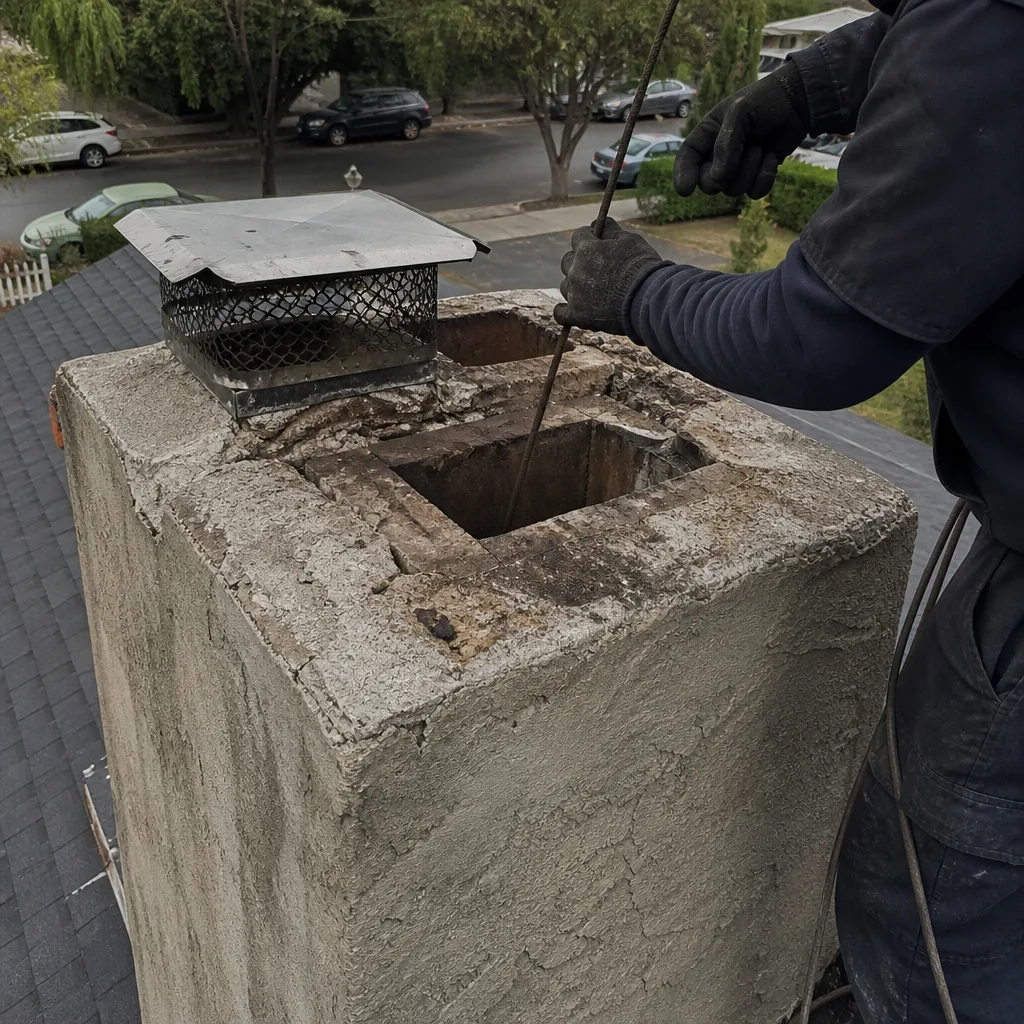
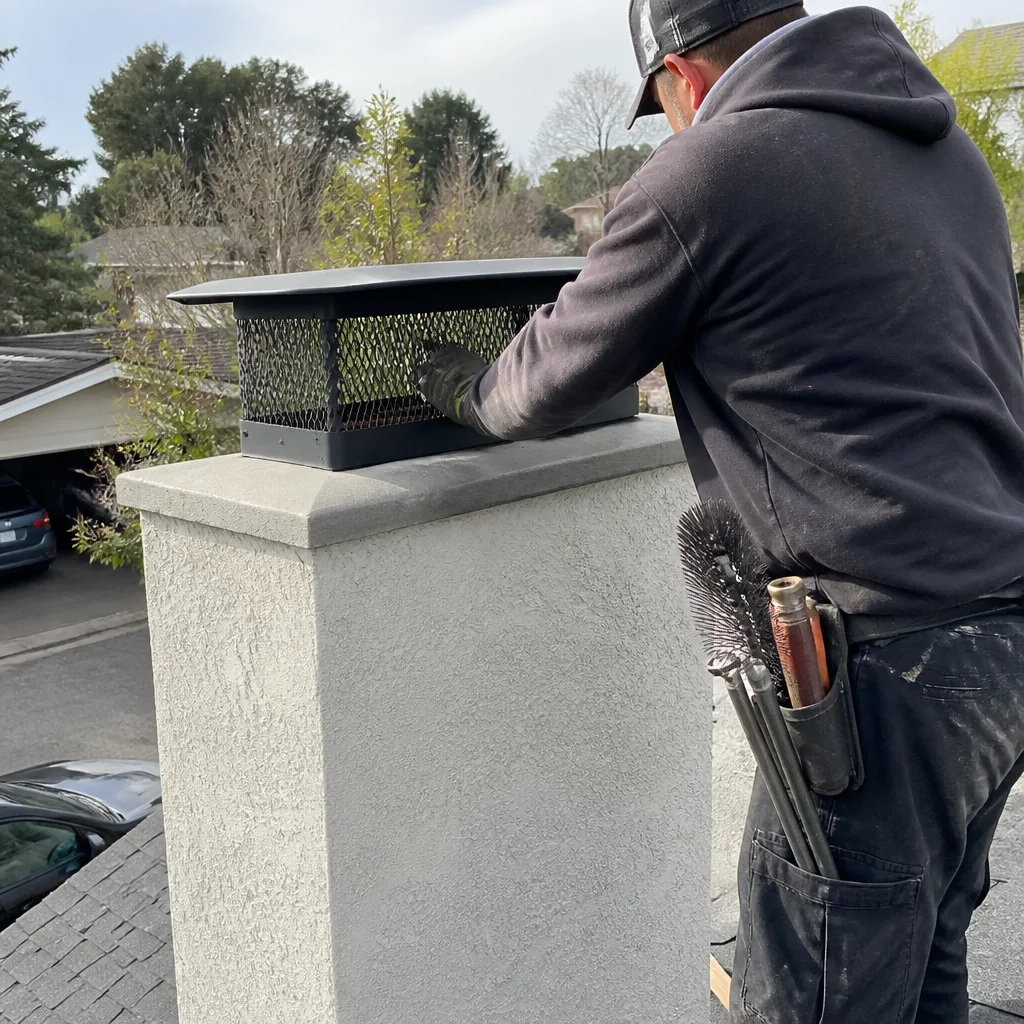
See the difference
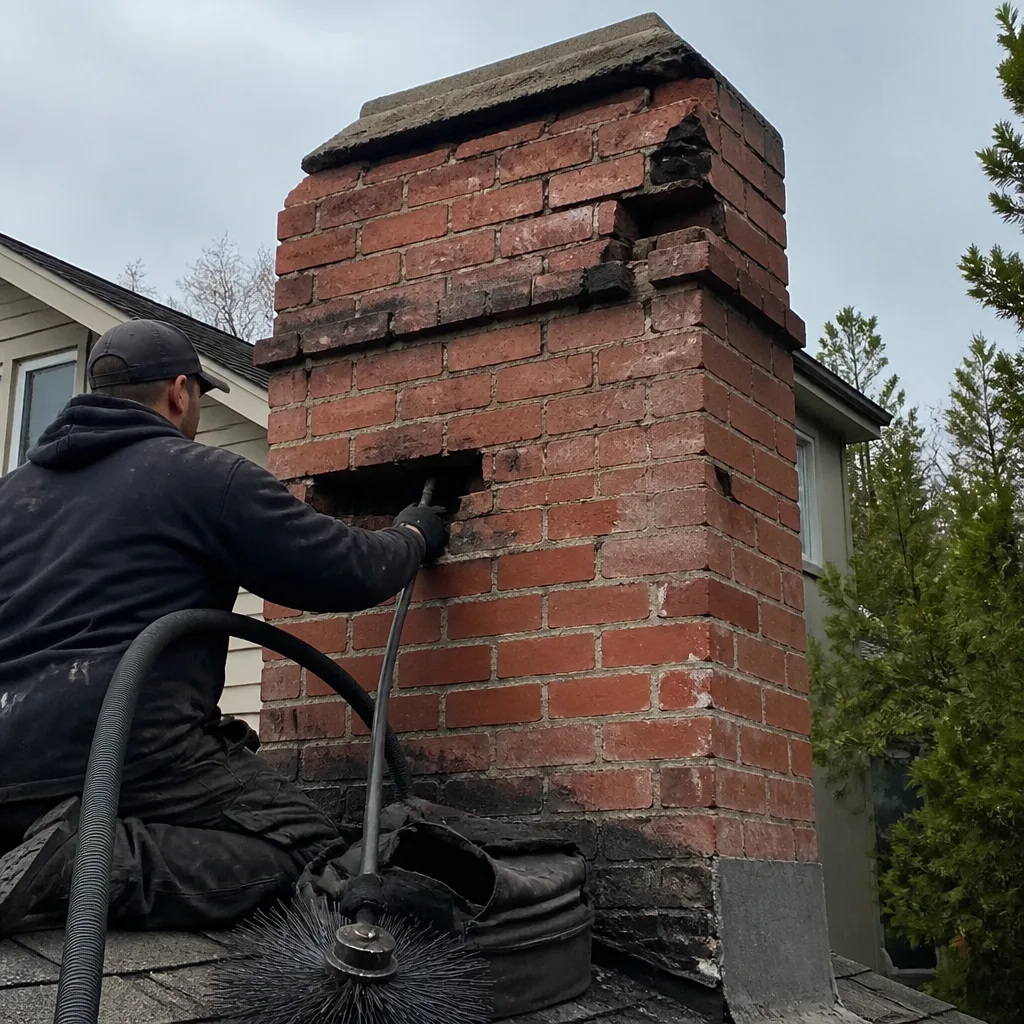 Before
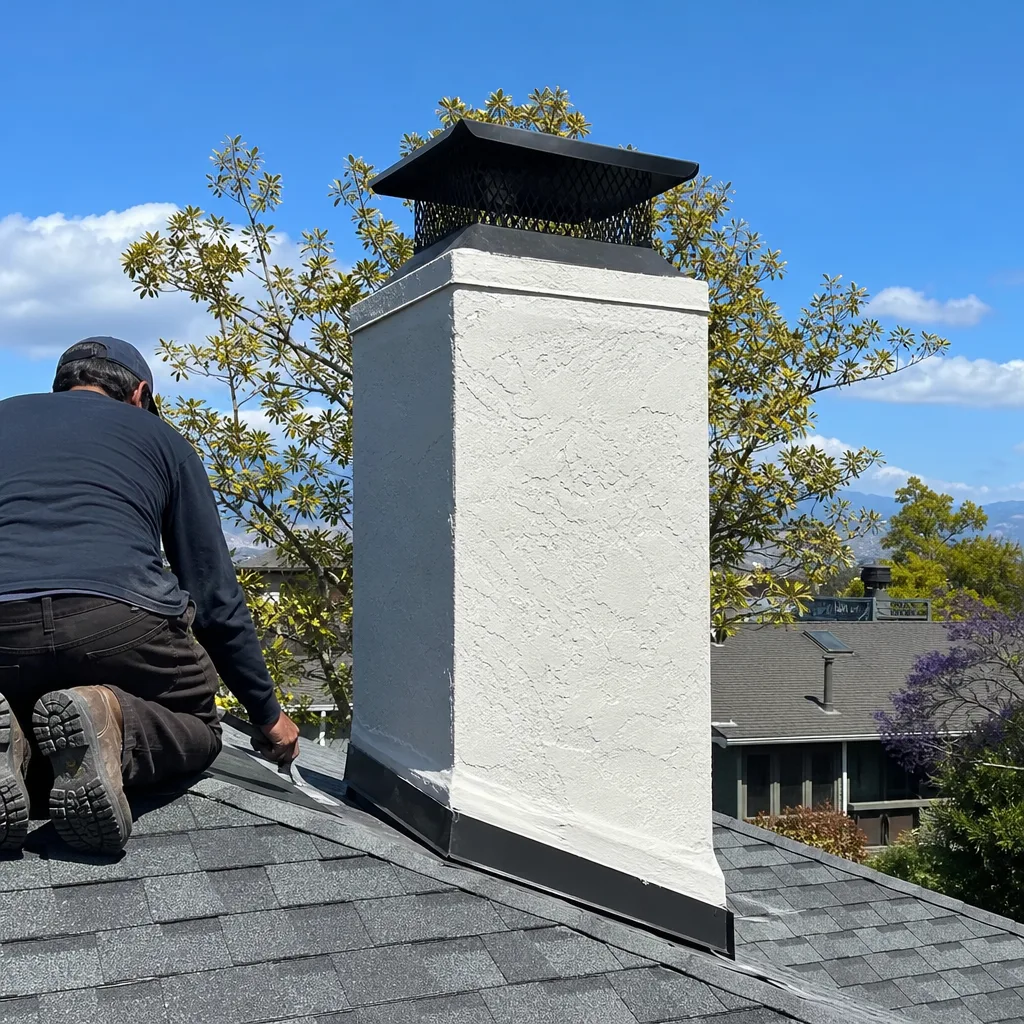 After
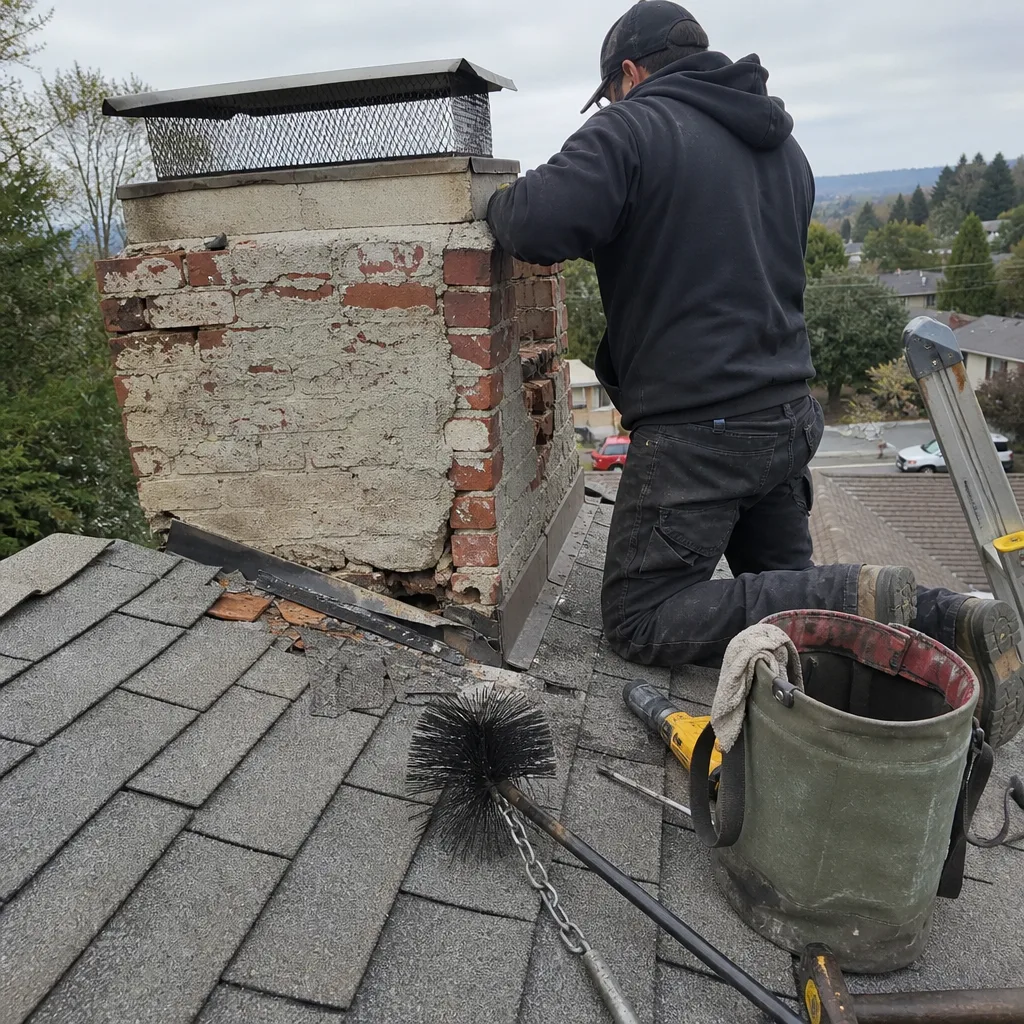 Before
 After
 Before
 After
When to Call a Professional
Call a chimney professional before burn season starts in San Carlos. Call if you’ve burned wood regularly for two or more years without a Level 2 inspection. Call if you’ve had a chimney fire, even a small one that burned itself out. Call if you see cracked or spalling brick on the chimney’s exterior or water staining on interior walls near the flue. Call if you’re buying or selling a home with a fireplace and need documentation. Call if you’re not sure whether past chimney work was permitted.
Most importantly, don’t lean a ladder against the chimney and start poking around. Chimney inspections on rooflines require the right equipment and training, and hiring a professional is cheaper than a fall. A chimney sweep is not just a cleaning service; a proper one evaluates the entire venting system, documents condition with video, and pulls the correct permit when repair scope demands it. Chimney Sweep San Carlos offers free estimates in San Carlos. Call (833) 620-0350.
Frequently Asked Questions
No. Chimney sweeping is classified as ordinary maintenance under California Building Code Section 105.2 and requires no permit anywhere in the state, including San Carlos. Sweeping removes creosote and debris without altering the chimney’s structure or fire-resistance rating.
Chimney sweeping in San Carlos typically costs between $200 and $400 depending on the fireplace’s condition, accessibility, and whether a Level 1 or Level 2 inspection is included. A Level 2 inspection with video documentation, which is required for real estate transfers, usually adds $150 to $300. Rates vary by company, and we recommend getting a written quote before booking. Call (833) 620-0350 for an exact estimate; estimates are free.
California law does not mandate a specific chimney inspection form, but NFPA 211 standards and California Civil Code disclosure requirements effectively make a Level 2 inspection the expected standard in a real estate transaction, especially in San Carlos where buyers’ inspectors routinely request it. A seller who can’t document the chimney’s condition faces renegotiation or required repairs before closing.
Yes. A liner replacement without a permit in San Mateo County can constitute unpermitted work under California Health and Safety Code, with the same disclosure, insurance, and legalization implications as other unpermitted structural modifications. Any reputable chimney contractor pulls the permit as standard practice on liner scopes.
NFPA 211 recommends annual inspection and cleaning as needed, with the standard benchmark being cleaning at 1/8 inch of creosote accumulation. In San Carlos, where the burn season is shorter than in colder climates but the dry fire season is longer, most homeowners who burn regularly every fall and winter need a sweep every one to two years. Households that burn only occasionally can often extend to two years with a good annual visual check.
A Level 1 inspection covers accessible portions of the chimney visually, no special tools, and no video scan. A Level 2 inspection adds video camera scanning of the flue interior and inspection of accessible attics, crawl spaces, and surrounding areas. Level 2 is required for real estate transfers, after chimney fires, and after earthquakes under NFPA 211.
Usually yes, a direct cap replacement doesn’t require a permit. However, if your home is in a San Carlos Wildland-Urban Interface zone, the cap must meet California’s spark arrestor mesh standard of 3/8 inch or smaller. Before buying a cap, confirm your parcel’s WUI status and choose a cap built to code spec rather than the cheapest option on the shelf.
In most San Mateo County cases, yes. HeatShield ceramic resurfacing restores the flue’s fire-containment function and is typically treated as liner repair under the California Building Code, which means a permit is required. We recommend confirming with the building department before scheduling, since classification can vary by specific scope. Call (833) 620-0350 to schedule an inspection and quote with permit coordination included.
The Bottom Line
Chimney cleaning itself is permit-free maintenance in California. What surprises San Carlos homeowners is how quickly the scope shifts into permit territory once repair starts: liner installation, firebox work, structural crown rebuilds, and even some resurfacing jobs require building department sign-off. The permit isn’t bureaucratic overhead, it’s the paper trail that protects you at resale, with your insurer, and in the disclosure process. If you don’t know what category your chimney work falls into, call someone who does. Chimney Sweep San Carlos provides free estimates and permit coordination for San Carlos homeowners. Call (833) 620-0350.
Written by the team at Chimney Sweep San Carlos, serving San Carlos since 2011.